If you spend time on social media or texting apps, you’ve probably seen ION pop up in chats, comments, memes, or TikTok captions. Many people search for ION meaning in text because the slang can look confusing at first. Is it a typo? An abbreviation? Or something totally different?
The truth is that ION has a few meanings depending on the situation. In texting, it is mostly used as a casual slang phrase, especially among younger users online. You’ll often spot it on WhatsApp, TikTok, Instagram, Snapchat, and even gaming chats.
Understanding internet slang helps you keep up with modern conversations and avoid awkward misunderstandings. In this guide, you’ll learn what ION means in text, where it came from, how people use it, and how to reply naturally when someone sends it to you.
What Does ION Mean in Text & Chat?
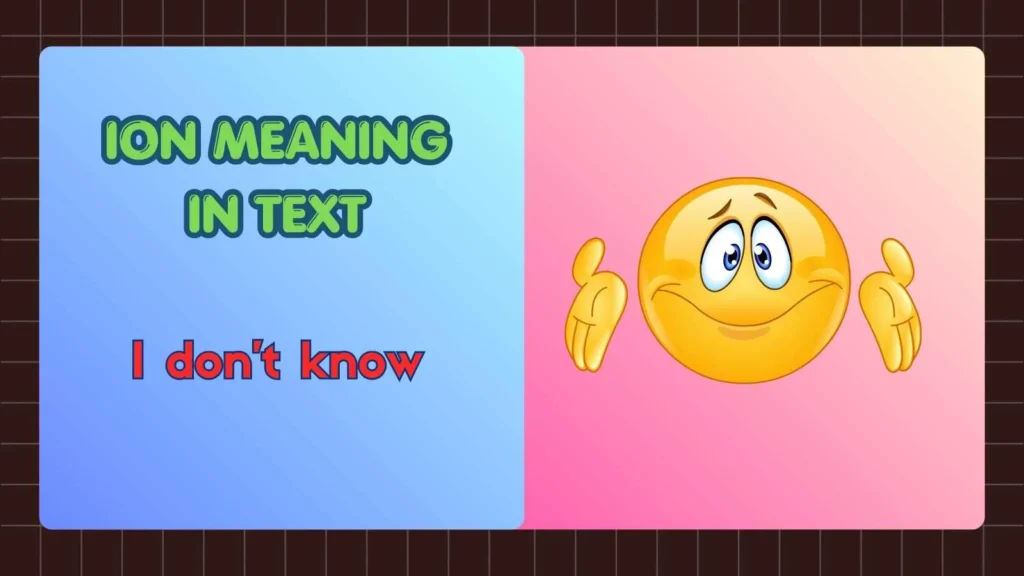
In texting and online chat, “ION” usually means:
“I don’t”
People use it as a fast and casual way to type phrases like:
- “I don’t know”
- “I don’t care”
- “I don’t want to”
- “I don’t think so”
The slang became popular because people like shortening words while texting quickly. Instead of typing “I don’t,” many users simply type “ion.”
Quick Examples
- “ION know what happened 😂”
- “ION wanna go today.”
- “ION think that’s true.”
- “ION got time for drama.”
In many cases, the apostrophe disappears, and the words blend together into one short slang term.
Why People Use It
People use “ION” because it:
- Saves typing time
- Sounds casual and relaxed
- Matches modern internet slang
- Feels natural in fast chats
It is especially common among teenagers and younger adults on social media platforms.
Important Note
“ION” does not always mean the same thing. In science, it has a completely different meaning related to chemistry and electricity. Context matters a lot.
For example:
- “ION know him” = slang for “I don’t know him”
- “Positive ion” = scientific term
That’s why understanding the conversation is important before assuming the meaning.
Full Form, Stands For & Short Meaning of ION
Unlike many internet abbreviations, “ION” is not always a traditional acronym with official capitalized words behind it. In texting slang, it mainly acts as a compressed version of “I don’t.”
Short Meaning of ION
The short meaning is:
- ION = I don’t
It can replace several longer phrases depending on context.
Common Expanded Forms
Here are some examples:
- ION know = I don’t know
- ION care = I don’t care
- ION understand = I don’t understand
- ION like that = I don’t like that
Is It an Acronym?
Technically, no. Most internet users treat “ION” as slang pronunciation typing rather than a real acronym.
It comes from how some people casually pronounce “I don’t” quickly in spoken English. When spoken fast, “I don’t” can sound similar to “ion.”
Other Meanings of ION
Outside texting slang, “ION” can also refer to:
- A charged particle in chemistry
- A media or television network name
- Technical or scientific abbreviations
That’s why context is key.
Why It Became Popular
Short slang terms spread quickly online because they:
- Fit character limits
- Work well in memes
- Feel trendy
- Create a casual tone
Today, “ION” is recognized by millions of social media users worldwide.
Origin, History & First Known Use of ION
The slang version of “ION” likely came from spoken English and urban internet culture. Instead of being invented by one person, it slowly developed through casual speech patterns and online communication.
Where Did It Start?
Many slang experts believe “ION” grew popular through:
- African American Vernacular English (AAVE)
- Hip-hop culture
- Twitter and texting culture
- Meme communities
In spoken conversation, some people pronounce “I don’t” very quickly, making it sound close to “ion.” Eventually, users started spelling it the same way online.
Rise on Social Media
The slang exploded during the late 2010s because of platforms like:
- Twitter/X
- TikTok
- Snapchat
- Instagram comments
Short phrases worked perfectly for quick reactions and memes.
Early Examples
People began posting messages like:
- “ION care fr.”
- “ION even know anymore.”
- “ION doing all that 😂”
The slang became part of everyday internet language, especially among younger audiences.
Why Slang Evolves
Internet slang changes constantly because users want:
- Faster typing
- Shorter phrases
- More personality
- Group identity online
Terms like “ION” help conversations feel more natural and informal.
Modern Popularity
Today, “ION” is widely understood in texting culture, though older users may still find it confusing at first.
How People Use ION in Daily Conversations
People use “ION” in many casual online conversations. It usually appears in relaxed chats between friends rather than formal communication.
Common Situations
You may see “ION” used when someone:
- Disagrees
- Refuses something
- Expresses uncertainty
- Avoids drama
- Jokes around
Daily Chat Examples
- “ION wanna argue today.”
- “ION think he serious.”
- “ION remember her name.”
- “ION got money for that 😭”
Tone Matters
“ION” often creates a:
- Casual tone
- Funny vibe
- Relaxed mood
- Friendly conversation style
It can sometimes sound dismissive depending on the wording.
In Group Chats
Group chats use slang heavily because messages move fast. Instead of writing full sentences, users shorten everything.
Example:
- Friend 1: “You coming tonight?”
- Friend 2: “ION know yet.”
In Memes & Reactions
The slang also appears in memes and reaction posts.
Examples:
- “ION reading all that.”
- “ION trusting him again 😂”
When Not to Use It
Avoid using “ION” in:
- Work emails
- School essays
- Professional messages
- Formal business chats
It’s best kept for casual conversations and social media.
ION Meaning Across WhatsApp, Instagram, TikTok & Snapchat
Different social apps use slang differently, but “ION” usually keeps the same core meaning.
On WhatsApp, “ION” appears in casual friend chats.
Examples:
- “ION feel like going out.”
- “ION seen that yet.”
People use it for quick texting because it saves time.
On Instagram, it often appears in:
- Comments
- Reels captions
- Story replies
Example:
- “ION blaming her tbh.”
Instagram slang tends to be trendy and meme-driven.
TikTok
TikTok helped spread “ION” even faster. Users include it in:
- Video captions
- Funny skits
- Comment sections
Examples:
- “ION doing that challenge 😂”
- “ION trusting this app anymore.”
TikTok slang moves quickly, but “ION” has stayed popular for years.
Snapchat
Snapchat conversations are fast and informal, making slang extremely common.
Examples:
- “ION got snaps today.”
- “ION know who that was 😭”
Why It Works Across Platforms
The term stays popular because it:
- Is short
- Sounds natural
- Matches internet culture
- Feels expressive
Different Meanings of ION in Other Fields
While “ION” is popular slang online, it also has official meanings in other industries and subjects.
In Chemistry
In science, an ion is:
An atom or molecule with an electric charge.
Examples include:
- Positive ions
- Negative ions
This meaning has nothing to do with texting slang.
In Technology
“ION” may appear in:
- Software names
- Tech abbreviations
- Network systems
In Media
There is also the Ion Media broadcasting brand, sometimes called ION Television.
In Gaming
Some gamers use “ION” casually in voice chats, usually meaning “I don’t.”
Why Confusion Happens
The same word can have different meanings depending on the conversation.
For example:
- “ION know” = slang
- “Lithium ion battery” = science term
Always check the context before assuming the meaning.
Common Confusions, Mistakes & Wrong Interpretations
Many people misunderstand “ION” when they first see it online.
Common Mistakes
Thinking It Means “Internet Only Network”
Some users assume it is a technical acronym. Usually, it is just slang for “I don’t.”
Confusing Science & Slang
The chemistry meaning often confuses students and older users.
Example confusion:
- “ION batteries” ≠ texting slang
Reading It Literally
Some people pronounce it as “eye-on,” while others say it like “I own.” In texting, pronunciation is flexible.
Misreading Tone
“ION” can sometimes sound rude if used carelessly.
Example:
- “ION care.”
This may feel dismissive depending on the situation.
How to Avoid Confusion
Look at:
- The topic
- The sentence
- The platform
- The age group using it
These clues usually reveal the intended meaning quickly.
Similar Terms, Alternatives & Related Slang
Internet slang changes fast, and “ION” has many related expressions.
Similar Slang Terms
- “IDK” = I don’t know
- “IDC” = I don’t care
- “FR” = for real
- “NGL” = not gonna lie
- “TBH” = to be honest
Alternative Ways People Say It
Instead of “ION,” users may write:
- “I dunno”
- “Dont know”
- “Ion know”
- “Idc honestly”
Related Social Media Slang
You might also see:
- “Bet”
- “Cap”
- “No cap”
- “Bruh”
- “Lowkey”
These slang terms often appear together in modern chats.
Internal Linking Suggestions
You can link this article to related abbreviation guides like:
- “IDK Meaning in Text”
- “FR Meaning on Snapchat”
- “NGL Meaning in Chat”
- “TBH Meaning Explained”
- “What Does IMO Mean?”
Examples of ION in Real Chat Situations
Real examples make slang easier to understand.
Friendly Chats
- “ION know what movie to watch 🍿”
- “ION wanna wake up early tomorrow.”
- “ION think she mad anymore.”
Funny Reactions
- “ION surviving this homework 😭”
- “ION trusting online reviews again 😂”
Relationship Chats
- “ION think he likes me.”
- “ION texting first this time.”
Gaming Chats
- “ION got enough coins yet.”
- “ION playing ranked today.”
Group Chat Examples
- Friend: “Who ate my fries?”
- Reply: “ION know 👀”
These examples show how flexible the slang can be.
How to Reply When Someone Says ION
Replying depends on the conversation tone.
Casual Replies
If someone says:
- “ION know.”
You can respond with:
- “That’s okay 😂”
- “Same honestly.”
- “We’ll figure it out.”
Funny Responses
- “You never know anything 😭”
- “Fair enough lol.”
Serious Conversations
If the chat is serious, answer clearly instead of focusing on slang.
Example:
- “ION think this will work.”
- Reply: “Why do you feel that way?”
Keep the Tone Natural
Match the mood of the conversation:
- Funny = playful response
- Serious = respectful reply
- Casual = relaxed answer
Is ION Still Popular? Trends & Online Usage
Yes, “ION” is still popular in 2026, especially among younger social media users.
Why It’s Still Trending
The slang remains active because it:
- Is short
- Sounds conversational
- Fits meme culture
- Works across platforms
Who Uses It Most?
Most common users include:
- Teens
- Gen Z
- Social media creators
- Gamers
- Meme accounts
Platforms Keeping It Alive
Apps like:
- TikTok
- Snapchat
- Discord
continue pushing modern slang trends.
Could It Fade Away?
Possibly. Internet slang changes very quickly. Some terms disappear after a few years, while others become permanent online language.
Right now, though, “ION” still appears regularly in comments, captions, and chats.
FAQs:
What does ION mean in texting?
In texting, “ION” usually means “I don’t.”
Is ION slang?
Yes, it is internet slang commonly used in casual chats and social media conversations.
What does ION know mean?
“ION know” means “I don’t know.”
Is ION used on TikTok?
Yes, it is very common on TikTok captions, comments, and memes.
Does ION have a scientific meaning too?
Yes. In chemistry, an ion is a charged atom or molecule.
Is ION formal English?
No. It is informal slang and should not be used in professional writing.
Conclusion:
The phrase ION meaning in text has become increasingly popular because online slang keeps evolving. In most chats, ION simply means I don’t, and people use it to type faster and sound casual. You’ll often see it on TikTok, Snapchat, Instagram, and WhatsApp conversations.
Although it may look confusing at first, understanding the context usually makes the meaning clear. The slang has roots in spoken language and internet culture, which helped it spread across social media platforms.
As with most online slang, ION works best in informal chats with friends or social communities. Whether you’re reading memes, texting, or scrolling through comments, knowing this term helps you stay connected with modern internet language.