If you’ve ever received a message saying DW and paused for a second, you’re not alone. The abbreviation “DW” is one of the most common short forms used in texting, social media, and online chats. People use it on apps like WhatsApp, Instagram, TikTok, and Snapchat to save time and keep conversations casual.
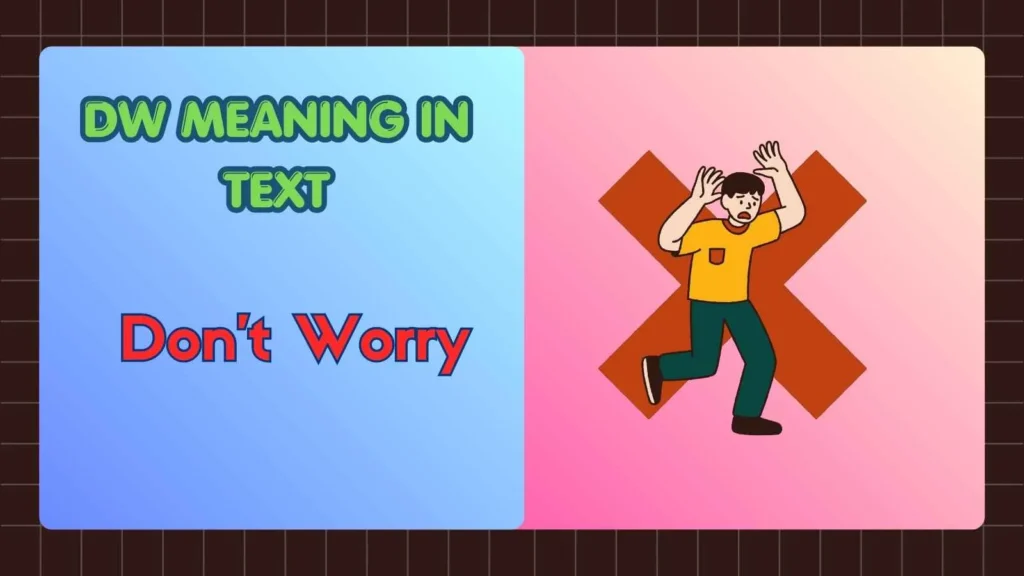
In most cases, DW simply means “Don’t Worry.” It’s often used to comfort someone, calm a situation, or make chats feel more relaxed and friendly. Because internet slang changes fast, many users search for the exact meaning of DW in text messages and social apps.
This guide explains everything about DW meaning in text including its full form, history, examples, social media usage, and how to reply naturally when someone sends it.
What Does DW Mean in Text & Chat?
In texting and online chat, DW usually means “Don’t Worry.” It is a quick way to reassure someone or tell them that a problem is not serious.
People use DW in casual conversations with friends, family, classmates, coworkers, and online communities. Since short messages are popular in digital communication, abbreviations like DW help people reply faster.
Simple Meaning of DW
- DW = Don’t Worry
- Used to comfort or reassure someone
- Common in texting and social media chats
Quick Chat Examples
- “DW, I already finished the project.”
- “DW about being late 😊”
- “You forgot your charger? DW, I have one.”
The tone behind DW is usually friendly and relaxed. Sometimes it can sound caring, while other times it is simply casual internet slang.
People often type it in lowercase too:
- dw
- Dw
- DW
All versions usually mean the same thing.
Because texting culture values speed and simplicity, abbreviations like DW have become part of everyday online language. Younger users especially use it frequently in fast-moving conversations.
Full Form, Stands For & Short Meaning of DW
The full form of DW is “Don’t Worry.” It is one of the easiest and most common texting abbreviations used online today.
Breakdown of the Abbreviation
- D = Don’t
- W = Worry
The phrase tells someone to relax or stop stressing about something.
Why People Use DW Instead of “Don’t Worry”
People shorten phrases online because it:
- Saves typing time
- Makes conversations faster
- Feels casual and modern
- Fits better in quick chats
For example:
| Full Phrase | Short Form |
|---|---|
| Don’t worry | DW |
| Be right back | BRB |
| Laugh out loud | LOL |
| Oh my God | OMG |
DW is usually positive and supportive. It helps reduce tension in conversations.
Common Situations Where DW Is Used
- Someone apologizes
- A person feels nervous
- There is a small mistake
- Someone is overthinking
Example Sentences
- “DW, mistakes happen.”
- “DW, your secret is safe with me 🤝”
- “DW about tomorrow. You’ll do great!”
In some rare cases, DW may have different meanings depending on the context, but “Don’t Worry” is by far the most popular meaning in texting.
Origin, History & First Known Use of DW
Like many internet abbreviations, DW became popular during the rise of online messaging and SMS texting in the late 1990s and early 2000s.
Back then, people had strict character limits on mobile phones. Shortening phrases became normal because typing on old keypads took more time. Abbreviations such as LOL, BRB, IDK, and DW quickly spread across online chats and texting culture.
Where DW Started
DW likely grew from:
- SMS texting culture
- Online chat rooms
- Instant messengers
- Gaming communities
- Early social media platforms
Apps and websites helped slang spread faster among younger internet users.
Why It Became Popular
The phrase “Don’t worry” is extremely common in daily conversation. Turning it into DW made communication shorter without losing meaning.
Over time, DW became standard internet slang because it:
- Sounds friendly
- Reduces awkwardness
- Makes chats feel casual
- Works in almost every situation
Internet Slang Evolution
Internet slang changes constantly, but simple abbreviations often survive longer because they are useful and easy to understand.
DW stayed relevant because reassurance is something people frequently express online.
Today, DW is recognized globally by millions of users across texting apps and social media platforms.
How People Use DW in Daily Conversations
DW is mainly used to reassure someone or make a conversation feel lighter. It often appears in personal chats, group messages, and social media comments.
Common Everyday Uses
1. Comforting Someone
- “DW, everything will be okay.”
- “DW about the test 😊”
2. Responding to an Apology
- “Sorry I replied late.”
- “DW!”
3. Reducing Stress
- “DW, I’ll handle it.”
- “DW, it’s not a big deal.”
4. Friendly Conversations
Friends use DW casually because it sounds warm and relaxed.
Tone Matters
DW can sound:
- Caring
- Casual
- Supportive
- Relaxed
However, tone depends on context. Sometimes a very short “DW” can seem dismissive if the conversation is serious.
Chat Examples
- “I spilled coffee on the notes 😭”
- “DW, I saved the PDF.”
- “Sorry for bothering you.”
- “DW at all!”
- “I think I messed up.”
- “DW, we can fix it.”
Because it is short and simple, DW works well in fast online conversations where people want quick responses.
Across WhatsApp Instagram TikTok & Snapchat
The meaning of DW stays mostly the same across social media platforms, but the way people use it can vary slightly.
DW on WhatsApp
On WhatsApp, DW is commonly used in personal chats and group conversations.
Examples:
- “DW, I’m on my way.”
- “DW about dinner tonight.”
It usually sounds caring and conversational.
DW on Instagram
On Instagram, people use DW in:
- DMs
- Story replies
- Comments
Examples:
- “DW, your post looks amazing 🔥”
- “DW, nobody noticed.”
DW on TikTok
TikTok comments move quickly, so abbreviations are common.
Users often type DW in reaction videos or comment sections:
- “DW guys, it was scripted 😂”
- “DW, part 2 is coming.”
DW on Snapchat
Snapchat conversations are casual and fast, making DW very popular.
Examples:
- “DW I deleted the pic.”
- “DW, your streak is safe 😅”
Across all platforms, the core meaning remains “Don’t Worry,” but the tone may change depending on emojis, punctuation, and context.
Different Meanings of DW in Other Fields
Although DW usually means “Don’t Worry” in texting, it can have other meanings in different industries and topics.
Other Possible Meanings of DW
| Field | Meaning |
|---|---|
| Business | Data Warehouse |
| Media | Deutsche Welle |
| Gaming | Dungeon World |
| Engineering | Double Wall |
| Medical | Dry Weight |
Why Context Is Important
The meaning depends on where and how the abbreviation is used.
For example:
- “DW posted a news update.”
- Could refer to Deutsche Welle
- “Our company improved its DW system.”
- Might mean Data Warehouse
- “DW, I got this.”
- Clearly means Don’t Worry
When reading online messages, the surrounding words usually make the intended meaning obvious.
Common Confusions, Mistakes & Wrong Interpretations
Some people misunderstand DW because internet slang changes rapidly and abbreviations can have multiple meanings.
Common Mistakes
Thinking DW Means “Do What”
This is a frequent misunderstanding, especially among new internet users.
Assuming It Is Rude
DW is usually friendly, but if used alone in serious conversations, it may seem cold or dismissive.
Example:
- “I’m really upset.”
- “DW.”
This could feel uncaring without additional words.
Confusing DW With Similar Slang
People sometimes mix DW with:
- IDW = I Don’t Want
- WDYM = What Do You Mean
- IDC = I Don’t Care
These abbreviations have very different meanings.
How to Avoid Confusion
- Read the full conversation
- Check the tone
- Look for emojis
- Notice the platform and situation
Most of the time, DW simply means “Don’t Worry.”
Similar Terms, Alternatives & Related Slang
DW belongs to a large group of internet abbreviations used in texting and social media.
Similar Slang Terms
| Slang | Meaning |
|---|---|
| BRB | Be Right Back |
| IDK | I Don’t Know |
| IMO | In My Opinion |
| TBH | To Be Honest |
| NVM | Never Mind |
| LOL | Laugh Out Loud |
Alternatives to DW
- No worries
- It’s okay
- All good
- Relax
- No problem
Example Comparisons
- “DW, I fixed it.”
- “No worries, I fixed it.”
Both sentences communicate reassurance.
Internal Linking Suggestions
You can also link this article to related abbreviation topics like:
- “LOL Meaning in Text”
- “TBH Meaning on Snapchat”
- “IDK Meaning in Chat”
- “NVM Meaning in Text”
- “SMH Meaning Online”
These related slang guides help readers understand internet language more easily.
Examples of DW in Real Chat Situations
Real examples make internet slang easier to understand.
Friendly Chats
- “Sorry I missed your call.”
- “DW 😊”
- “I forgot your birthday gift.”
- “DW about it!”
School Conversations
- “I didn’t study enough 😭”
- “DW, the test was easy.”
Relationship Chats
- “Are you mad at me?”
- “DW, we’re good ❤️”
Work Messages
- “I accidentally sent the wrong file.”
- “DW, I corrected it.”
Gaming Chats
- “I lost the match 😅”
- “DW, we’ll win next round.”
These examples show how DW fits naturally into modern conversations.
How to Reply When Someone Says DW
Replying to DW is simple because the phrase is reassuring.
Common Replies
- “Thanks!”
- “Okay 😊”
- “Got it!”
- “Appreciate it.”
- “That helps.”
Casual Responses
- “Cool, thanks.”
- “Haha okay.”
- “Good to know 😄”
Friendly Example Conversations
1: “Sorry for being late.”
2: “DW!”
1: “Thanks 😊”
1: “I think I ruined everything.”
2: “DW, it’s fixable.”
1: “That makes me feel better.”
A relaxed reply usually matches the casual tone of DW.
Is DW Still Popular? Trends & Online Usage
Yes, DW is still very popular in 2026. Even though new slang terms appear constantly, simple abbreviations remain widely used because they are easy and practical.
Why DW Still Survives
- Short and quick
- Easy to understand
- Works on every platform
- Friendly tone
- Common in texting culture
Who Uses DW Most?
DW is especially popular among:
- Teenagers
- Young adults
- Social media users
- Gamers
- Frequent texters
However, people of all ages use it today.
Modern Usage Trends
Internet slang changes fast, but classic abbreviations like DW continue to survive because they are useful in everyday communication.
Even voice messaging and video apps haven’t reduced its popularity much. Text-based chatting is still huge worldwide, especially on mobile apps.
DW remains one of the safest and most universally understood chat abbreviations online.
FAQs:
What does DW stand for in texting?
DW usually stands for “Don’t Worry.”
Is DW rude in messages?
No, DW is generally friendly and reassuring. Tone depends on context.
What does DW mean on Snapchat?
On Snapchat, DW still means “Don’t Worry.”
Can DW have multiple meanings?
Yes, in other fields it can mean things like Data Warehouse or Deutsche Welle.
Do people still use DW in 2026?
Yes, DW remains very common across texting and social media apps.
Is DW formal or informal?
DW is informal slang mainly used in casual conversations.
What is the best reply to DW?
Simple replies like “Thanks,” “Okay,” or “Got it 😊” work well.
Conclusion:
DW is one of the most common and useful abbreviations in online communication. In most chats and text messages, it simply means “Don’t Worry.” People use it to reassure others, reduce stress, and keep conversations casual and friendly.
From WhatsApp chats to TikTok comments, DW has become a normal part of internet culture. Its simplicity and positive tone are the main reasons it continues to stay popular year after year.
Understanding slang like DW helps you communicate more naturally online and avoid confusion in conversations. Whether you are texting friends, chatting on social media, or learning internet abbreviations for the first time, DW is an easy phrase to recognize and use confidently.