If you’ve ever received a message that made you think, “Wow, I didn’t need to know that,” you’ve already experienced the meaning of TMI in action. TMI is one of the most common internet abbreviations used in texting, social media, and online chats.
People use it when someone shares information that feels too personal, awkward, or unnecessary for the conversation.
Many people search for “TMI meaning in text” because they see it in messages, comments, or social media posts and want to understand what it means. Whether you’re chatting on WhatsApp, scrolling through TikTok, or messaging friends on Instagram, knowing internet slang helps you communicate more naturally.
In this guide, you’ll learn the meaning of TMI, where it came from, how people use it, examples from real conversations, and whether it’s still popular today.
What Does TMI Mean in Text & Chat?
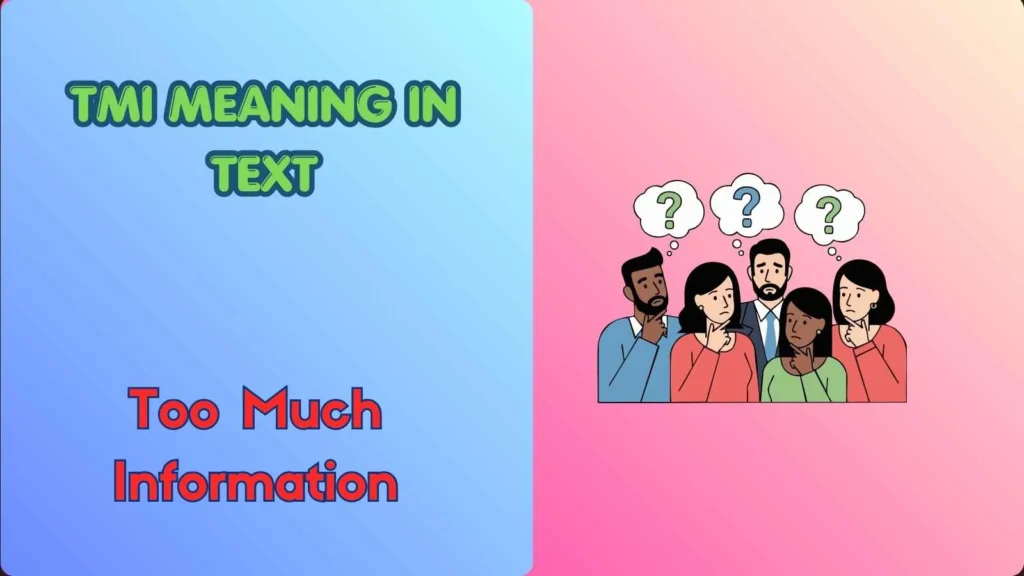
TMI stands for “Too Much Information.”
In texting and online conversations, people use TMI when someone shares details that are considered overly personal, embarrassing, graphic, or simply unnecessary for the discussion.
The phrase is often used humorously rather than as a serious criticism. Friends commonly say TMI when someone reveals something awkward or private.
For example:
- “I just described my dentist appointment in detail.”
- “TMI! 😂”
The abbreviation helps people quickly express that they’ve heard more information than they wanted to know.
Common situations where TMI appears:
- Discussing personal health issues
- Sharing embarrassing stories
- Talking about bathroom habits
- Describing relationship details
- Revealing unnecessary personal facts
TMI can be playful, friendly, or slightly critical depending on the tone and relationship between the people involved.
In most casual conversations, TMI is not meant to be rude. Instead, it’s often used as a lighthearted way to say, “You may have shared a little too much.”
Full Form, Stands For & Short Meaning of TMI
The full form of TMI is:
TMI = Too Much Information
Short meaning:
“You shared more details than necessary.”
People often use TMI as a reaction rather than a complete sentence. It works as a quick response when someone overshares.
Examples:
- Friend: “I accidentally wore two different socks all day.”
- You: “Not quite TMI, but that’s funny.”
- Friend: “Let me explain exactly what happened during my surgery.”
- You: “TMI 😅”
The abbreviation became popular because it’s short, easy to type, and instantly understood by many internet users.
Quick summary:
- Full form: Too Much Information
- Category: Internet slang
- Usage: Texting, social media, chats
- Tone: Usually humorous
- Purpose: Reacting to oversharing
Today, TMI is recognized worldwide and appears frequently in both online and offline conversations.
Origin, History & First Known Use of TMI
The phrase “Too Much Information” existed long before texting and social media became popular.
People used the full phrase in everyday conversation to express discomfort when hearing overly personal details. Over time, the phrase was shortened to TMI for convenience.
The abbreviation gained significant popularity during the 1990s and early 2000s as internet chat rooms, forums, and instant messaging services became more common.
Several factors contributed to its growth:
- Rise of online messaging
- Popular culture references
- Increased use of abbreviations
- Faster digital communication
As texting became mainstream, users began shortening common phrases to save time. TMI fit perfectly into this trend.
Eventually, the term spread across:
- SMS messages
- Online forums
- Twitter/X
- Snapchat
- TikTok
Today, TMI is considered a standard internet expression and is understood by multiple generations.
Even people who are not active on social media often recognize the term because it has become part of everyday language.
How People Use TMI in Daily Conversations
TMI is commonly used when someone reveals information that feels unnecessary or overly detailed.
People often use it among friends because it adds humor to conversations.
Examples of daily usage:
- Talking about medical procedures
- Discussing personal hygiene
- Sharing embarrassing moments
- Revealing private relationship details
Conversation examples:
- “I got food poisoning and spent all night in the bathroom.”
- “TMI! 😆”
- “I just wanted to know how your day was.”
- “Sorry, TMI?”
Sometimes people use TMI to refer to themselves.
Examples:
- “Oops, that was probably TMI.”
- “Sorry for the TMI.”
In these situations, the speaker realizes they may have shared too much information.
TMI can also be used jokingly:
- I ate seven slices of pizza.”
- “TMI, but impressive.”
The tone often determines whether the expression sounds playful or critical.
TMI Meaning Across WhatsApp, Instagram, TikTok & Snapchat
Although the meaning remains the same, the way TMI is used can vary across platforms.
On WhatsApp, TMI usually appears in private chats and group conversations.
Examples:
- “Please don’t tell us about your stomach problems.”
- “TMI 😂”
Instagram users often comment TMI on posts, stories, or reels when creators share very personal details.
Examples:
- “Nobody needed that information.”
- “TMI 😭”
TikTok
TikTok creators frequently joke about oversharing.
Examples:
- “Story time that should have stayed private.”
- “This is peak TMI.”
Snapchat
On Snapchat, TMI often appears in casual friend conversations.
Examples:
- “You could’ve kept that to yourself.”
- “TMI lol.”
Across all platforms, the core meaning remains consistent: someone shared more information than necessary.
Different Meanings of TMI in Other Fields
While TMI usually means “Too Much Information” in texting, it can have other meanings depending on the context.
Possible alternative meanings include:
| Field | Meaning |
|---|---|
| Medical | Too Much Information |
| Business | Various organization-specific meanings |
| Technology | Internal company abbreviations |
| Education | Program-specific acronyms |
However, when used in text messages, social media, and online chats, TMI almost always means:
Too Much Information
Context is important when interpreting any abbreviation.
If you see TMI in a casual conversation, the internet slang meaning is usually the correct one.
Common Confusions, Mistakes & Wrong Interpretations
Many people misunderstand TMI when they first encounter it.
Common mistakes include:
- Thinking it means “Tell Me Information”
- Assuming it is an insult
- Believing it is always offensive
- Confusing it with other abbreviations
Important things to remember:
- TMI is usually playful.
- It does not always mean someone is angry.
- Friends often use it jokingly.
- Context determines the tone.
Example:
- “TMI 😂”
- Clearly playful.
Versus:
- “That was TMI.”
- Potentially more serious.
Reading the overall conversation helps determine the intended meaning.
Similar Terms, Alternatives & Related Slang
Several internet expressions have meanings similar to TMI.
Popular alternatives include:
- Oversharing
- Too personal
- Didn’t need to know that
- Spare me the details
- That’s enough information
- Keep that to yourself
Related slang:
- LOL (Laugh Out Loud)
- OMG (Oh My God)
- BRB (Be Right Back)
- FYI (For Your Information)
- TBH (To Be Honest)
- IMO (In My Opinion)
Internal linking suggestions:
- LOL Meaning in Text
- TBH Meaning in Text
- FYI Meaning in Text
- IMO Meaning in Text
- BRB Meaning in Text
- SMH Meaning in Text
These abbreviations are often used together in online conversations.
Examples of TMI in Real Chat Situations
Here are realistic examples of TMI in action.
Example 1
- Friend: “I accidentally ripped my pants at work.”
- Friend 2: “TMI 😂”
2
- Person: “Let me describe my medical procedure.”
- Friend: “TMI, please stop 😅”
3
- User: “I haven’t washed my hair in six days.”
- Friend: “Definitely TMI.”
4
- Friend: “Sorry, that was probably TMI.”
- You: “A little, but it’s okay.”
5
- User: “Here’s every detail of my breakup.”
- Friend: “That’s some serious TMI 😭”
Quick examples:
- “TMI!”
- “Sorry for the TMI.”
- “Okay, that’s TMI 😂”
- “Way too much information.”
- “Thanks for sharing… I think. TMI.”
How to Reply When Someone Says TMI
If someone replies with TMI, don’t panic.
Most of the time, they’re joking.
Possible responses:
- “Oops, sorry! 😅”
- “Fair enough.”
- “Maybe I shared too much.”
- “You asked!”
- “My bad 😂”
If you’re unsure about their tone, keep your reply friendly.
Examples:
- “Haha, noted.”
- “I’ll spare the details next time.”
- “Sorry for oversharing.”
In most cases, a lighthearted response keeps the conversation comfortable.
Is TMI Still Popular? Trends & Online Usage
Yes, TMI remains popular today.
Despite the constant creation of new internet slang, TMI has stayed relevant for decades.
Reasons for its continued popularity:
- Easy to understand
- Works across generations
- Useful in daily conversations
- Frequently used on social media
- Fits modern texting habits
You can still find TMI regularly on:
- TikTok
- Snapchat
- Online forums
Many internet abbreviations fade away, but TMI has become part of mainstream language.
Because people will always overshare occasionally, there will probably always be a need for TMI.
FAQs:
What does TMI mean in texting?
TMI means “Too Much Information.” It is used when someone shares more personal details than necessary.
Is TMI rude?
Usually not. Most people use it humorously among friends.
What is the full form of TMI?
The full form of TMI is “Too Much Information.
Can I use TMI on social media?
Yes. TMI is commonly used on WhatsApp, Instagram, TikTok, Snapchat, and other platforms.
What should I reply to TMI?
You can respond with “Oops, sorry,” “My bad,” or “Haha, noted.”
Is TMI still popular in 2026?
Yes. TMI remains one of the most recognized and widely used internet abbreviations.
Conclusion:
TMI is a simple but useful abbreviation that stands for “Too Much Information.” People use it when someone shares details that feel overly personal, unnecessary, or slightly embarrassing.
While it may sound negative at first, TMI is usually used in a playful and friendly way among friends, family members, and online communities. Whether you see it on WhatsApp, Instagram, TikTok, Snapchat, or in everyday conversations, understanding TMI helps you follow modern internet slang more confidently.
The term has remained popular for years because it is easy to understand and fits naturally into digital communication.
The next time someone says TMI, you’ll know exactly what they mean and maybe even laugh along with them