If you’ve recently seen “JP” in a text message, social media comment, or online chat, you may have wondered what it means. Internet slang changes quickly, and new abbreviations appear all the time.
That is why many people search for the meaning of JP when they encounter it in conversations on platforms like WhatsApp, Instagram, TikTok, and Snapchat.
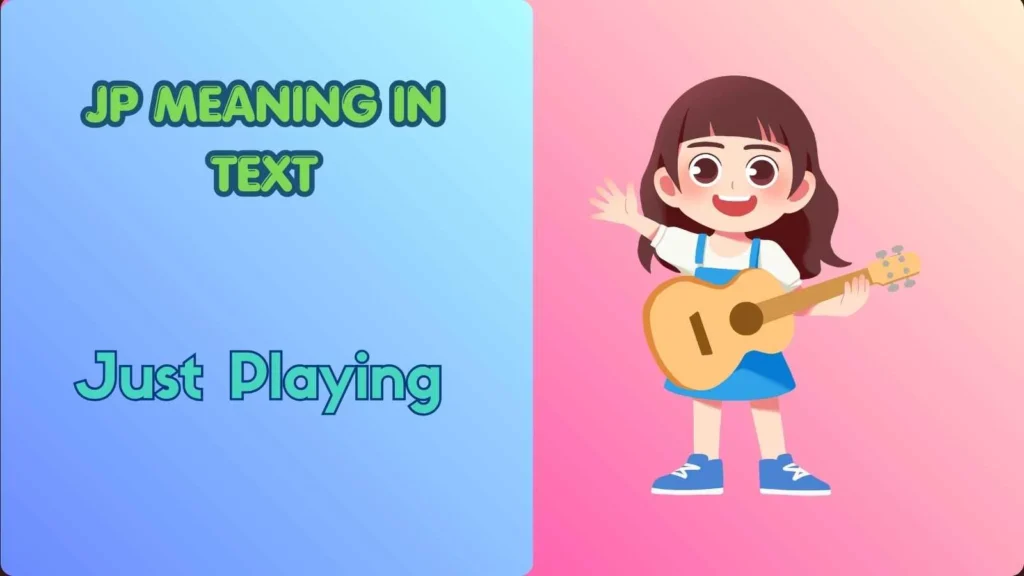
In most texting situations, JP stands for “Just Playing.” It is commonly used to show that someone is joking, teasing, or not being completely serious. The abbreviation helps keep conversations light and prevents misunderstandings. However, JP can have several other meanings depending on the context.
This guide explains the meaning of JP in text, where it came from, how people use it, examples from real conversations, and whether it is still popular today.
What Does JP Mean in Text & Chat?
In texting and online conversations, JP most commonly means “Just Playing.”
People use it after making a joke, teasing a friend, or saying something that should not be taken seriously. It works similarly to saying “just kidding” or “I’m joking.”
The abbreviation helps clarify tone, especially because text messages do not include facial expressions or voice cues.
Examples:
- “You’re the worst gamer ever 😂 JP!”
- “I was going to ignore your message. JP!”
- “Don’t come to the party tonight… JP, of course you’re invited.”
JP is often used between friends, family members, classmates, and coworkers who have a casual relationship.
Quick meanings:
- JP = Just Playing
- JP = Just Joking (sometimes)
- JP = Not serious
- JP = Friendly teasing
The exact meaning depends on the conversation, but in most chat situations, it signals humor rather than seriousness.
Full Form, Stands For & Short Meaning of JP
The most widely recognized full form of JP in texting is:
JP = Just Playing
This phrase tells the reader that the previous statement was meant as a joke.
Some people also use JP to mean:
- Just Joking
- Joke Post
- Joke Purpose (rare)
- Joking Person (uncommon)
Short meaning:
JP means the sender is joking, teasing, or not being completely serious.
Because texting lacks tone of voice, abbreviations like JP help avoid confusion. A playful comment might sound rude without context, so adding JP reassures the other person that no offense was intended.
For example:
- “I forgot your birthday again 😅 JP.”
- “You’re buying everyone dinner tonight. JP.”
In both cases, JP immediately signals that the statement is not serious.
Origin, History & First Known Use of JP
The abbreviation JP emerged from early internet culture and text messaging.
As mobile phones became popular in the late 1990s and early 2000s, users looked for shorter ways to communicate. Text messages had character limits, which encouraged abbreviations such as:
- LOL
- BRB
- OMG
- JK
- JP
JP developed as a quick way to say “Just Playing” without typing the entire phrase.
Although “JK” (Just Kidding) became more mainstream, JP remained popular in certain online communities, gaming chats, friend groups, and social media conversations.
Over time, internet slang evolved across messaging apps and social networks. While newer generations often use emojis, memes, or GIFs to indicate humor, JP still appears regularly in casual conversations.
Today, it is recognized as a friendly abbreviation that softens jokes and playful comments.
How People Use JP in Daily Conversations
People use JP whenever they want to show they are joking.
Common situations include:
Friendly Teasing
- “You’re banned from the group chat 😂 JP.”
Playful Sarcasm
- “That was the best movie ever… JP.”
Lighthearted Pranks
- “Your package got lost. JP, it arrived today.”
Casual Humor
- “I finished all your snacks 😆 JP.”
People often place JP:
- At the end of a sentence
- After a joke
- Following a teasing comment
Examples:
- “You’re paying for lunch today, JP.”
- “I can’t believe you did that 😂 JP.”
- “JP, I was only kidding.”
Using JP helps keep conversations fun and reduces the chance of misunderstandings.
JP Meaning Across WhatsApp, Instagram, TikTok & Snapchat
The meaning of JP is generally the same across social media platforms, but usage can vary slightly.
Friends often use JP in private chats.
Example:
- “I’m deleting your number 😆 JP.”
JP may appear in comments or direct messages.
Example:
- “Worst photo ever 😂 JP.”
TikTok
Creators sometimes use JP in captions when making jokes.
Example:
- “I’m quitting TikTok. JP.”
Snapchat
JP appears in quick conversations and snaps.
Example:
- “I accidentally sent that to everyone 😭 JP.”
Across all platforms, the core message remains the same:
JP tells people not to take the previous statement seriously.
Different Meanings of JP in Other Fields
Although “Just Playing” is the most common texting meaning, JP can represent other things depending on context.
Initials
JP may refer to a person’s initials.
Example:
- “JP sent the report.”
Job Position
In some workplaces, JP may be used internally as a job title abbreviation.
Legal Context
JP can mean:
- Justice of the Peace
Geography
JP is sometimes used as a country abbreviation for:
- Japan
Entertainment
Some fans use JP when discussing:
- Japanese versions of games
- Japanese servers
- Japanese releases
Always look at the surrounding conversation to determine the correct meaning.
Common Confusions, Mistakes & Wrong Interpretations
Because JP has multiple meanings, confusion can happen.
Common mistakes include:
Assuming It Always Means Japan
Not every use of JP refers to Japan.
Confusing It with JK
JP and JK are similar.
- JK = Just Kidding
- JP = Just Playing
Both indicate humor, but they are not identical abbreviations.
Missing the Joke
Sometimes readers overlook JP and think the message is serious.
Example:
- “You’re fired. JP.”
Without noticing JP, the message could seem alarming.
Misreading Initials
If someone named John Parker signs a message as JP, it may simply be their initials.
Context is the key to understanding the correct meaning.
Similar Terms, Alternatives & Related Slang
Many abbreviations serve a similar purpose to JP.
Popular alternatives include:
- JK = Just Kidding
- LOL = Laughing Out Loud
- LMAO = Laughing My Ass Off
- ROFL = Rolling On the Floor Laughing
- LMK = Let Me Know
- IDC = I Don’t Care
- IMO = In My Opinion
Other ways people show they’re joking:
- “Just kidding”
- “Kidding!”
- “I’m joking”
- “Not serious 😂”
- “Haha”
These expressions help communicate humor and playful intent.
Internal Linking Suggestions
You can link this article to related pages such as:
- JK Meaning in Text
- LOL Meaning in Text
- BRB Meaning in Text
- IMO Meaning in Text
- SMH Meaning in Text
- TBH Meaning in Text
- WYF Meaning in Text
Examples of JP in Real Chat Situations
Here are realistic examples of JP in action.
Example 1
Alex: You’re never invited again 😆
Sam: What?
Alex: JP! You know I’m joking.
Example 2
Emma: I ate your cake.
Lily: Seriously?!
Emma: JP 😂
Example 3
Jake: I sold your gaming console.
Ryan: Wait, what?
Jake: JP, relax.
Example 4
Mia: I’m moving to Antarctica.
Noah: Really?
Mia: JP 😄
Example 5
Sarah: I forgot your birthday.
Chris: Ouch.
Sarah: JP! I already got your gift.
How to Reply When Someone Says JP
When someone uses JP, you can respond casually.
Possible replies:
- “Haha, good one!”
- “You got me there.”
- “I almost believed you.”
- Nice joke 😂”
- “That’s funny.”
- “You scared me for a second!”
Example:
Friend: I deleted all our photos. JP.
You: You almost gave me a heart attack 😂
Since JP signals a joke, lighthearted responses usually fit best.
Is JP Still Popular? Trends & Online Usage
JP is still used online, although it is less common than some major abbreviations like LOL or JK.
Reasons people still use JP:
- Quick to type
- Easy to understand
- Useful for teasing
- Helps clarify humor
Younger users may rely more on emojis, memes, GIFs, and reaction images. However, JP continues to appear in:
- Text messages
- Gaming chats
- Group conversations
- Social media comments
Its popularity may not be at its peak, but it remains a recognized internet abbreviation.
FAQs:
What does JP mean in a text message?
JP usually means “Just Playing.” It tells the reader that the sender is joking or teasing.
Is JP the same as JK?
No. JK means “Just Kidding,” while JP means “Just Playing.” Their meanings are very similar.
What does JP mean on Snapchat?
On Snapchat, JP usually means “Just Playing” and indicates that a message is not serious.
Can JP mean something other than Just Playing?
Yes. Depending on context, JP can refer to Japan, Justice of the Peace, initials, or other meanings.
Is JP considered slang?
Yes. JP is internet slang and a texting abbreviation commonly used in casual conversations.
Do people still use JP in 2026?
Yes. While it is not as common as LOL or JK, many people still use JP in chats and social media conversations.
Conclusion:
JP is a simple but useful abbreviation that most commonly means “Just Playing.” People use it to show they are joking, teasing, or speaking playfully rather than seriously. Whether it appears on WhatsApp, Instagram, TikTok, Snapchat, or regular text messages, JP helps prevent misunderstandings and keeps conversations friendly.
Like many internet abbreviations, its meaning depends on context. While it can sometimes refer to Japan, Justice of the Peace, or someone’s initials, “Just Playing” remains the most common texting definition.
Understanding JP makes it easier to follow modern online conversations and respond naturally when friends use it. The next time you see JP in a message, you’ll know there’s a good chance the sender is simply having fun.