If you’ve spent any time texting, chatting online, or scrolling through social media, you’ve probably come across the abbreviation GTG. It’s one of those internet shortcuts that people use every day, yet many users still search for its exact meaning and proper usage.
Understanding text abbreviations helps you communicate faster and avoid confusion in conversations. Whether you’re chatting with friends on WhatsApp, replying to messages on Instagram, or talking in gaming communities, knowing what GTG means can make online communication much easier.
In this guide, you’ll learn the complete meaning of GTG, its full form, history, usage across social media platforms, common mistakes people make, and real-world examples. By the end, you’ll know exactly when and how to use GTG in text conversations.
What Does GTG Mean in Text & Chat?
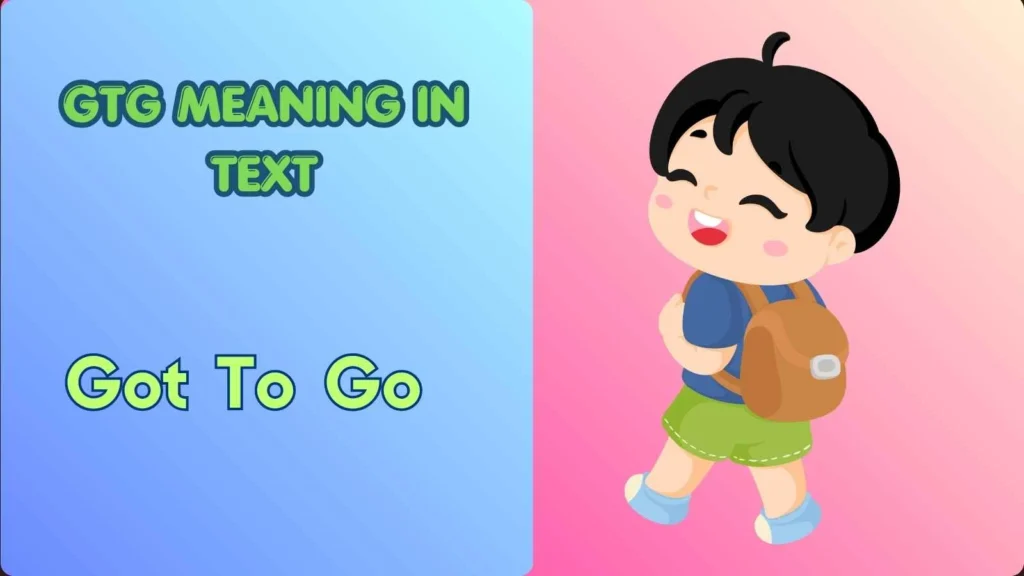
In text messages and online chats, GTG usually means “Got To Go” or “Gotta Go.”
People use it when they need to leave a conversation quickly. It acts as a short and polite way to tell someone that they’re ending the chat.
For example:
- “GTG, my class is starting.”
- “Sorry, GTG. Talk later!”
- “It’s getting late, GTG now.”
The abbreviation saves time and is widely understood across texting platforms.
GTG is considered informal and is mostly used among friends, family members, classmates, gamers, and social media users. While it’s common in casual conversations, it’s generally not suitable for formal emails or professional communication.
The popularity of GTG comes from the early days of online chat rooms when users wanted to type quickly without writing full sentences.
Today, it remains one of the most recognized internet abbreviations and continues to be used by millions of people worldwide.
Full Form, Stands For & Short Meaning of GTG
The full form of GTG is:
GTG = Got To Go
In many situations, people also interpret it as:
GTG = Gotta Go
Both meanings are essentially the same.
Short Meaning
The short meaning of GTG is:
“I need to leave now.”
It tells the other person that the conversation is ending because you have something else to do.
Common Uses
- Leaving a chat
- Ending a phone conversation through text
- Exiting a gaming session
- Signing off social media messages
- Finishing a group discussion
Examples:
- “GTG, dinner is ready.”
- “GTG, see you tomorrow.”
- “GTG, my battery is dying.”
The abbreviation is simple, quick, and universally understood among internet users.
Origin, History & First Known Use of GTG
GTG emerged during the early growth of internet communication in the 1990s.
As online chat rooms, instant messengers, and forums became popular, users looked for ways to communicate faster. Typing full phrases repeatedly could be time-consuming, especially on slow internet connections and early keyboards.
Common abbreviations started appearing, including:
- BRB (Be Right Back)
- LOL (Laughing Out Loud)
- TTYL (Talk To You Later)
- GTG (Got To Go)
GTG quickly became a favorite because people frequently needed a quick way to exit conversations.
The abbreviation became even more common with the rise of:
- AOL Instant Messenger
- MSN Messenger
- Yahoo Messenger
- Online gaming communities
Later, smartphones and social media platforms helped GTG spread to a much larger audience.
Today, despite the arrival of new slang terms, GTG remains a classic internet abbreviation that continues to be recognized by users of all ages.
How People Use GTG in Daily Conversations
GTG is most often used at the end of a conversation.
Instead of writing a long explanation, users can quickly indicate that they’re leaving.
Common Daily Examples
- “GTG, my meeting starts in five minutes.”
- “GTG, mom is calling me.”
- “GTG, talk to you later!”
- “GTG, need to finish my homework.”
In Gaming
Players often write:
- “GTG after this match.”
- “Sorry team, GTG.”
In Group Chats
- “GTG everyone, good night!”
- “Fun chat, but GTG now.”
The abbreviation helps keep conversations efficient while remaining friendly and polite.
GTG Meaning Across WhatsApp, Instagram, TikTok & Snapchat
Although GTG has the same core meaning across platforms, its usage can vary slightly depending on where it’s used.
On WhatsApp, GTG usually signals the end of a conversation.
Example:
- “GTG, heading to work now.”
Users often send GTG in direct messages.
Example:
- “GTG, catch you later!”
TikTok
TikTok users sometimes include GTG in comments or replies when leaving a discussion.
Example:
- “This debate is wild 😂 GTG now.”
Snapchat
Snapchat conversations are often fast-paced, making GTG particularly common.
Example:
- “GTG, my phone is about to die.”
Across all these platforms, the meaning remains consistent: the user is leaving the conversation.
Different Meanings of GTG in Other Fields
Although GTG usually means “Got To Go,” it can have different meanings in specific industries or contexts.
Some alternative meanings include:
- Global Trade Group
- Government Technology Group
- Goods To Go
- Gas-To-Go
- Gateway Group
These meanings are typically found in business, technology, logistics, or organizational settings.
How to Identify the Correct Meaning
Ask yourself:
- Is the conversation casual?
- Is it happening in text messages?
- Is someone ending a conversation?
If the answer is yes, GTG almost certainly means “Got To Go.”
Context is the easiest way to determine the intended meaning.
Common Confusions, Mistakes & Wrong Interpretations
Many people misunderstand GTG when they first encounter it.
Common Mistakes
Mistake 1: Thinking GTG Means “Good To Go”
While “Good To Go” is a common phrase, the abbreviation for it is often interpreted differently depending on context.
Example:
- “Everything is ready. You’re good to go.”
This isn’t the typical texting meaning of GTG.
Mistake 2: Assuming It Is Rude
Some users think GTG sounds abrupt.
In reality, it’s widely accepted as a polite way to leave a conversation.
Mistake 3: Using It in Formal Emails
GTG works well in casual chats but not in professional communication.
Instead of writing:
- “GTG now.”
Use:
- “I need to leave the meeting now.”
- “I have to go. Thank you.”
Understanding context prevents misunderstandings.
Similar Terms, Alternatives & Related Slang
Many abbreviations serve a similar purpose to GTG.
Popular Alternatives
- BRB – Be Right Back
- TTYL – Talk To You Later
- BBL – Be Back Later
- AFK – Away From Keyboard
- CYA – See You
- GN – Good Night
- CU – See You
Example Comparisons
- GTG = Leaving now
- BRB = Returning soon
- TTYL = Talk later
- AFK = Temporarily unavailable
Internal Linking Suggestions
You may also link to related abbreviation articles such as:
- LOL Meaning in Text
- BRB Meaning in Text
- TTYL Meaning in Text
- IMO Meaning in Text
- BTW Meaning in Text
- AFK Meaning in Text
These related terms often appear in the same online conversations.
Examples of GTG in Real Chat Situations
Here are realistic chat examples showing how GTG is used.
Friends Chat
Alex: Want to play another game?
Ryan: Can’t, GTG. Dinner time 🍕.
Family Chat
Mom: Don’t forget your appointment tomorrow.
Jake: Thanks! GTG now, love you ❤️
School Chat
Emma: Did you finish the assignment?
Sarah: Yes. GTG though, class starts in 2 minutes.
Snapchat
Chris: Send me the photo later.
Mia: Sure! GTG 📱
Gaming Chat
Player 1: Another round?
Player 2: Sorry, GTG. Early morning tomorrow.
These examples show how naturally GTG fits into everyday communication.
How to Reply When Someone Says GTG
When someone says GTG, a simple response is usually best.
Common Replies
- “Okay, talk later!”
- “No problem.”
- “See you soon!”
- “Good luck!”
- “Take care.”
- “Bye!”
- “Catch you later.”
Example Conversation
Friend: GTG, my ride is here.
You: No worries, see you later! 😊
Quick Response Ideas
- “TTYL!”
- “Have fun!”
- “Good night!”
- “Stay safe!”
- “See ya!”
Friendly replies help end conversations smoothly.
Is GTG Still Popular? Trends & Online Usage
Yes, GTG is still widely used.
While newer slang terms appear every year, GTG has maintained its popularity because it is simple, clear, and useful.
Reasons it remains popular:
- Easy to type
- Universally recognized
- Works across platforms
- Useful in everyday conversations
- Understood by multiple generations
Younger users may occasionally write:
- “Gotta bounce”
- “I’m out”
- “Catch ya later”
However, GTG continues to appear regularly in texting, gaming chats, social media messages, and group conversations.
Its long history and simplicity make it one of the internet’s most durable abbreviations.
Why GTG Became Popular on the Internet
GTG became popular because it solves a common communication need. People often need to leave conversations quickly, especially online. Instead of typing a full sentence such as “I have to leave now,” users can simply type GTG. The abbreviation spread rapidly through chat rooms, instant messaging platforms, and later social media apps. Its simplicity and universal understanding helped it remain relevant for decades.
Key reasons for its popularity include:
- Saves typing time
- Easy to remember
- Works across platforms
- Understood worldwide
- Fits fast-paced online conversations
GTG vs G2G: Are They the Same Thing?
Many people wonder whether GTG and G2G mean different things. In most situations, they mean exactly the same thing.
The abbreviation G2G uses the number “2” to replace the word “to.”
Examples:
- GTG, see you later.
- G2G, talk tomorrow.
Both versions communicate that the person is leaving the conversation. GTG is generally more common today, while G2G is often seen in older texting styles.
When You Should Use GTG
GTG works best in casual conversations where brevity is acceptable.
Suitable situations include:
- Chatting with friends
- Group conversations
- Gaming sessions
- Social media messaging
- Family chats
Examples:
- “GTG, my movie is starting.”
- “GTG, I’ll message you later.”
Using GTG helps end conversations politely without needing a lengthy explanation.
When You Should Avoid Using GTG
Although GTG is useful, it is not appropriate in every situation.
Avoid using it in:
- Formal business emails
- Job applications
- Academic assignments
- Professional reports
- Official customer communications
Instead, use complete sentences such as:
- “I need to leave the meeting now.”
- “Thank you for your time. I must go.”
Professional communication generally requires more clarity and formality.
GTG in Online Gaming Culture
Gaming communities have embraced GTG for many years. Players often use it when they need to leave a match, stop playing, or log off unexpectedly.
Examples:
- “GTG, dinner is ready.”
- “Sorry team, GTG.”
- “GTG, see you all tomorrow.”
Because online games move quickly, short abbreviations like GTG help players communicate without interrupting gameplay.
How GTG Changed with Mobile Texting
Before smartphones, texting was slower and more difficult. Older phones used numeric keypads, making long messages time-consuming to type.
Abbreviations like GTG became extremely valuable because they:
- Reduced typing effort
- Saved message space
- Improved communication speed
Even though modern keyboards are faster, many people continue using GTG out of habit and convenience.
Psychological Reason People Use GTG
GTG is more than a shortcut. It also serves a social purpose.
When ending a conversation, people often want to:
- Avoid seeming rude
- Leave politely
- Signal future communication
- End chats quickly
GTG provides a simple and socially accepted way to accomplish all of these goals.
For example:
- “GTG, but let’s continue this later.”
This reassures the other person that the conversation is ending for practical reasons, not because of disinterest.
How Different Age Groups Use GTG
GTG is recognized by multiple generations, but usage patterns vary.
Teenagers
Often use GTG in social media chats and gaming.
Young Adults
Use GTG in messaging apps, group chats, and online communities.
Older Adults
May use GTG less frequently but generally understand its meaning.
Its broad recognition is one reason the abbreviation has survived for so long.
GTG and Digital Communication Etiquette
Good online etiquette involves letting people know when you’re leaving a conversation.
GTG helps by:
- Preventing sudden disappearances
- Showing respect
- Managing expectations
- Keeping communication clear
Instead of abruptly stopping replies, sending a quick GTG message provides closure and helps maintain positive interactions.
Common Variations of GTG
Over the years, several variations have appeared.
Examples include:
- GTG now
- GTGN (Got To Go Now)
- G2G
- GTG bye
- GTG ttyl
- GTG cya
These variations add extra context while keeping the original meaning intact.
GTG in Memes and Internet Culture
Internet users occasionally use GTG humorously in memes and jokes.
Examples:
- “My responsibilities arrived. GTG.”
- “Saw my exam schedule. GTG forever.”
- “GTG before my mom sees I’m still online.”
These playful uses help keep the abbreviation relevant in modern internet culture.
Most Common Situations Where People Say GTG
GTG frequently appears during everyday activities.
Typical situations include:
- Going to bed
- Starting work
- Attending classes
- Meeting friends
- Family obligations
- Running errands
- Low phone battery
Examples:
- “GTG, my battery is at 1%.”
- “GTG, work starts in five minutes.”
These real-life scenarios explain why the abbreviation remains useful.
Future of GTG in Online Communication
Despite the constant creation of new slang, GTG continues to maintain its place in internet language.
Experts often consider it a “classic abbreviation” because it:
- Has a clear meaning
- Is easy to understand
- Works globally
- Requires no explanation
As long as people communicate online, there will likely be situations where a quick “GTG” remains the perfect response.
FAQs:
What does GTG stand for in texting?
GTG stands for “Got To Go” or “Gotta Go.”
Is GTG rude?
No. GTG is generally considered a polite and normal way to end a conversation.
Can GTG mean Good To Go?
In some contexts, yes. However, in most text messages, GTG usually means “Got To Go.”
Is GTG still used today?
Yes. GTG remains popular on WhatsApp, Snapchat, Instagram, gaming chats, and texting apps.
When should I use GTG?
Use GTG when you need to leave a conversation quickly and casually.
Is GTG appropriate for work emails?
No. Formal communication should use complete phrases instead of chat abbreviations.
Conclusion:
GTG is one of the most recognizable internet abbreviations and has remained popular for decades. In most text conversations, it means “Got To Go” or “Gotta Go,” signaling that someone is leaving the chat or ending a conversation.
Its simplicity, convenience, and universal recognition make it a favorite across WhatsApp, Instagram, TikTok, Snapchat, gaming platforms, and text messaging apps. While GTG can occasionally have different meanings in business or technical settings, context usually makes the intended definition obvious.
Whether you’re new to internet slang or simply looking for a quick refresher, understanding GTG helps you communicate more naturally online and keep up with modern digital conversations.