If you’ve ever received a message containing “CM” and wondered what it means, you’re not alone. Text abbreviations and internet slang evolve quickly, and many people search for terms like “CM meaning in text” to avoid confusion during online conversations.
The abbreviation CM can have several meanings depending on the context, platform, and person using it. In casual texting, social media chats, gaming communities, and professional discussions, CM may represent different phrases. Understanding the intended meaning can help you respond correctly and avoid misunderstandings.
In this guide, you’ll learn the most common meaning of CM in text messages, its full forms, history, social media usage, examples, and alternative meanings. Whether you saw CM on WhatsApp, Instagram, TikTok, Snapchat, or in a text message, this article will help you understand exactly what it means.
What Does CM Mean in Text & Chat?
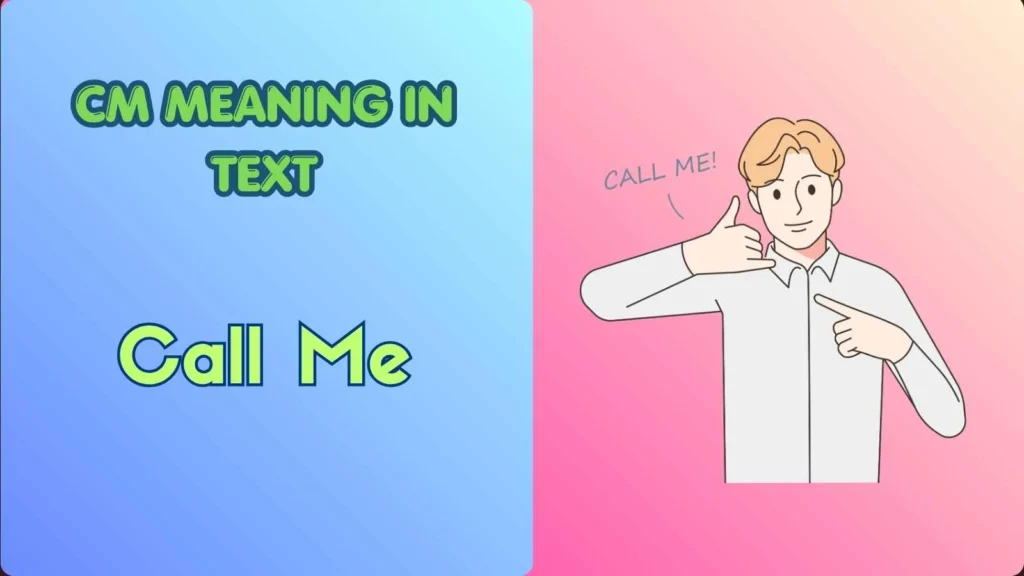
In text messages and online chats, CM most commonly stands for “Call Me.”
People use CM as a quick way to ask someone to phone them instead of continuing a text conversation. Since texting abbreviations are designed to save time, CM became a simple shorthand for requesting a call.
For example:
- “Need to discuss something important. CM when you’re free.”
- “I’m driving right now. CM later.”
- “Can’t explain in text. CM ASAP.”
The meaning usually depends on the conversation. If someone sends only “CM,” they are often asking for a phone call.
In some online communities, CM may also represent other phrases, but “Call Me” remains one of the most recognized meanings in casual digital communication.
Quick examples:
- CM after work.
- CM when you reach home.
- CM if you need help.
- CM tonight.
- CM ASAP.
Because texting is fast-paced, abbreviations like CM help users communicate efficiently without typing long sentences.
Full Form, Stands For & Short Meaning of CM
The most common full form of CM in texting is:
CM = Call Me
Short meaning:
“Please call me.”
However, abbreviations can have multiple interpretations depending on the context. Some alternative expansions include:
- Call Me
- Community Manager
- Content Management
- Campaign Manager
- Centimeter
- Chief Minister
When used in personal chats, “Call Me” is usually the correct interpretation.
Examples:
- “CM when you’re done.”
- “Busy right now, CM later.”
- “CM before making the decision.”
The key is to look at the surrounding conversation.
If a friend sends:
“Need your advice. CM.”
They almost certainly mean “Call Me.”
If you’re reading a business document mentioning CM, it may refer to Content Management or Community Manager instead.
Context is everything when decoding abbreviations.
Origin, History & First Known Use of CM
The abbreviation CM emerged during the early days of mobile texting and internet messaging.
Back when SMS messages had strict character limits, users created shortened forms of common phrases. Expressions such as:
- BRB (Be Right Back)
- LOL (Laugh Out Loud)
- TTYL (Talk To You Later)
- CM (Call Me)
became popular because they saved valuable typing time.
As texting expanded through online chat rooms, instant messengers, and mobile phones, abbreviations spread rapidly across digital culture.
The rise of smartphones did not eliminate shorthand language. Instead, abbreviations remained useful because they allow faster communication.
Today, CM continues to appear in:
- Text messages
- WhatsApp chats
- Facebook Messenger
- Snapchat conversations
- Gaming chats
- Online communities
Although modern keyboards make typing easier, people still enjoy quick, convenient shortcuts, which helps keep abbreviations like CM alive.
How People Use CM in Daily Conversations
CM is typically used when a phone call is preferred over texting.
Common situations include:
- Discussing something private
- Explaining a complicated issue
- Sharing urgent information
- Talking while multitasking
- Avoiding lengthy text exchanges
Examples:
- “I have news. CM when free.”
- “Need help with something. CM ASAP.”
- “Too much to type. CM later.”
- “I’m outside. CM when you arrive.”
Sample chat:
Person A: “Can you explain what happened?”
Person B: “It’s complicated. CM 📞”
Another example:
Person A: “Did the meeting go well?”
Person B: “Yes, but CM later and I’ll tell you everything.”
The abbreviation feels casual, friendly, and direct. Most people immediately understand the request when used in personal conversations.
CM Meaning Across WhatsApp, Instagram, TikTok & Snapchat
The meaning of CM can vary slightly depending on the platform.
On WhatsApp, CM usually means:
Call Me
Example:
- “Can’t text right now. CM.”
In Instagram DMs, users often write CM when they want to continue the conversation through a phone call.
Example:
- “Need details? CM later.”
TikTok
TikTok comments sometimes use CM differently depending on the niche. However, in private messages it commonly means “Call Me.”
Snapchat
Snapchat users often prefer quick communication. CM may be used when someone wants to switch from snaps to a direct phone conversation.
Example:
- “CM after school 📱”
Regardless of platform, context usually points to the intended meaning.
Different Meanings of CM in Other Fields
Outside texting, CM can represent many different terms.
Some common examples include:
| Field | Meaning of CM |
|---|---|
| Measurement | Centimeter |
| Government | Chief Minister |
| Marketing | Campaign Manager |
| Social Media | Community Manager |
| Business | Content Management |
| Medicine | Case Management |
| Education | Classroom Management |
Examples:
- “The box is 20 cm wide.” (centimeter)
- “The CM announced new policies.” (Chief Minister)
- “Our CM manages social engagement.” (Community Manager)
Because CM has many meanings, always consider the topic being discussed.
Common Confusions, Mistakes & Wrong Interpretations
One of the biggest mistakes people make is assuming CM always means the same thing.
Common misunderstandings include:
- Reading CM as centimeter during a text chat.
- Assuming CM means Chief Minister in casual messages.
- Confusing Community Manager with Call Me.
- Misinterpreting professional jargon.
Example:
Text:
“CM tonight.”
Correct interpretation:
“Call Me tonight.”
Incorrect interpretation:
“Centimeter tonight.”
Looking at the surrounding conversation usually removes confusion.
Tips:
- Check the platform.
- Consider who sent it.
- Read previous messages.
- Look for context clues.
Most texting misunderstandings happen when abbreviations are viewed without context.
Similar Terms, Alternatives & Related Slang
Several abbreviations have meanings similar to CM.
Popular alternatives include:
- HMU — Hit Me Up
- PM — Private Message
- DM — Direct Message
- TTYL — Talk To You Later
- ASAP — As Soon As Possible
- BRB — Be Right Back
- IDC — I Don’t Care
- IMO — In My Opinion
Examples:
- “HMU later.”
- “DM me.”
- “TTYL.”
- “CM when free.”
Internal linking suggestions:
- HMU Meaning in Text
- PM Meaning in Text
- TTYL Meaning in Text
- IMO Meaning in Text
- BRB Meaning in Text
- ASAP Meaning in Text
These related abbreviations are often used by the same audiences who use CM.
Examples of CM in Real Chat Situations
Here are realistic examples.
Example 1
Friend: “Need your opinion.”
Friend: “CM when available.”
2
Coworker: “The issue is urgent.”
Coworker: “CM ASAP.”
3
Sibling: “I’m at the airport.”
Sibling: “CM when you land.”
4
Friend: “Too much drama to explain 😂”
Friend: “CM later.”
5
Partner: “Miss you ❤️”
Partner: “CM tonight.”
These examples show how naturally CM fits into everyday conversations.
How to Reply When Someone Says CM
When someone sends CM, your response depends on availability.
Possible replies:
- “Sure, calling now.”
- “I’ll call you in 10 minutes.”
- “Busy at the moment. Can I call later?”
- “What’s up?”
- “I’ll ring you after work.”
Example conversation:
Person A: “CM when free.”
Person B: “Sure, I’ll call in five minutes.”
If you’re unable to call:
Person B: “Can’t call right now. Can you text me instead?”
A simple, polite response is usually enough.
Is CM Still Popular? Trends & Online Usage
Yes, CM remains relevant, although it isn’t as trendy as some newer internet slang terms.
Many people still use it because:
- It’s short.
- It’s easy to understand.
- It saves typing.
- It works across platforms.
Modern users often combine CM with other abbreviations and emojis.
Examples:
- “CM ASAP 📞”
- “CM later 😊”
- “CM when free.”
While newer slang appears every year, practical abbreviations tend to survive longer. Since people regularly need phone calls, CM continues to maintain its usefulness in digital communication.
Why Do People Use CM Instead of Typing “Call Me”?
Texting is all about speed and convenience. Many users prefer abbreviations because they save time and reduce typing effort. CM is a simple shortcut that instantly communicates a request for a phone call.
People often use CM when:
- They are busy.
- They need a quick response.
- The topic is too complex for text.
- They prefer speaking directly.
- They want to avoid long messaging threads.
The abbreviation works especially well in fast-paced conversations where both people already understand common texting slang.
When Should You Use CM in a Conversation?
CM is most appropriate when a voice call would be more effective than texting.
Common situations include:
- Discussing sensitive information.
- Explaining detailed instructions.
- Handling emergencies.
- Talking about work matters.
- Resolving misunderstandings.
For example:
- “Need to discuss tomorrow’s plans. CM later.”
- “There has been a change. CM ASAP.”
Using CM can make communication more efficient when a phone call is the best option.
CM in Professional Communication
Although CM is mainly used in casual conversations, some professionals use it in informal workplace chats.
Examples include:
- Team messaging apps.
- Internal company communication.
- Freelancer-client discussions.
- Quick project updates.
Example:
“Need approval before proceeding. CM when available.”
However, in formal emails and official documents, writing “Please call me” is usually more professional than using the abbreviation.
Age Groups That Commonly Use CM
Different generations use texting abbreviations differently.
Teenagers
Teens often use CM in quick chats with friends and classmates.
Young Adults
Young adults frequently use CM for social planning, dating conversations, and work-related messaging.
Older Adults
Some older users prefer writing the full phrase, but many have adopted common abbreviations through smartphones and messaging apps.
Because CM is simple and easy to understand, it is recognized across multiple age groups.
CM in Online Gaming Communities
Gamers frequently use abbreviations to communicate quickly during gameplay.
In gaming chats, CM may mean:
- Call Me
- Clan-related terms (depending on the game)
- Community-specific phrases
Example:
- “Match ended. CM after the tournament.”
Fast communication is essential in gaming, which helps abbreviations remain popular.
CM and the Evolution of Internet Language
The internet has transformed how people communicate. Short forms like CM emerged because users wanted faster ways to exchange information.
Over the years, digital language evolved from:
- SMS texting
- Chat rooms
- Instant messengers
- Social media platforms
- Mobile apps
CM is part of a larger trend where people shorten common phrases to make communication quicker and more convenient.
How Context Changes the Meaning of CM
Context is the most important factor when interpreting abbreviations.
Consider these examples:
Text Message
“CM tonight.”
Meaning: Call Me.
Political News
“The CM addressed the public.”
Meaning: Chief Minister.
Measurement Guide
“The object is 15 cm long.”
Meaning: Centimeter.
Understanding the surrounding conversation prevents confusion and helps identify the correct meaning.
Signs That CM Means “Call Me”
Several clues can indicate that CM stands for “Call Me.”
Look for phrases such as:
- When free
- ASAP
- Later
- Tonight
- After work
- After class
Examples:
- “CM when you get home.”
- “CM after the meeting.”
- “CM if you have questions.”
These phrases often signal that the sender wants a phone conversation.
CM Compared to Other Popular Text Abbreviations
CM serves a different purpose from many common internet abbreviations.
| Abbreviation | Meaning | Purpose |
|---|---|---|
| CM | Call Me | Request a call |
| BRB | Be Right Back | Temporary absence |
| LOL | Laugh Out Loud | Express amusement |
| TTYL | Talk To You Later | End conversation |
| ASAP | As Soon As Possible | Express urgency |
| DM | Direct Message | Request private chat |
Each abbreviation helps users communicate specific intentions quickly.
Advantages of Using CM in Digital Communication
Using CM offers several benefits:
- Saves time.
- Reduces typing.
- Easy to understand.
- Works across platforms.
- Encourages direct communication.
For many users, a quick phone call solves issues faster than a long text conversation.
Will CM Continue to Be Used in the Future?
Internet slang constantly changes, but practical abbreviations often survive longer than trendy expressions.
CM remains useful because:
- People still make phone calls.
- The abbreviation is easy to remember.
- It is widely recognized.
- It works across generations.
While new slang terms appear every year, CM’s straightforward meaning gives it lasting value in digital communication.
Fun Facts About CM
Here are some interesting facts about the abbreviation:
- CM has dozens of meanings across different industries.
- It is one of the simplest two-letter texting abbreviations.
- Many people learn its meaning through context rather than dictionaries.
- It remains common in personal messaging despite advances in voice messaging.
- The same abbreviation can mean completely different things in government, business, and casual chat.
FAQs:
What does CM mean in a text message?
CM usually means “Call Me” in texting and online chats.
Is CM rude to send?
No. It is generally considered a normal and friendly shorthand request.
What does CM mean on Snapchat?
Most commonly, it means “Call Me.”
Can CM mean something other than Call Me?
Yes. It can also mean Community Manager, Chief Minister, Campaign Manager, Content Management, or Centimeter depending on context.
How should I respond to CM?
You can call the person or reply with a message explaining when you’ll be available.
Is CM still used in 2026?
Yes. Although not as common as some abbreviations, it remains widely understood in texting.
Conclusion:
Understanding the CM meaning in text becomes easy once you know the context. In most personal conversations, CM simply means “Call Me,” making it a quick and convenient way to request a phone call. However, the abbreviation can also represent several other terms in business, government, education, and measurement-related discussions.
The best way to determine the correct meaning is to examine the surrounding conversation and platform. Whether you encounter CM on WhatsApp, Instagram, TikTok, Snapchat, or a standard text message, context will usually reveal the intended interpretation.
As digital communication continues to evolve, abbreviations like CM remain popular because they save time while keeping conversations simple, efficient, and easy to understand.