If you spend time texting, scrolling social media, or chatting online, you may have seen the abbreviation JS pop up in messages. Many people search for JS meaning in text because the term can have different meanings depending on the conversation, platform, or tone.
In casual texting, slang changes fast, and short forms like JS help people type quicker and sound more natural online.
The meaning of JS is usually simple, but it can still confuse people when used in chats on WhatsApp, TikTok, Instagram, or Snapchat. Sometimes it means Just Saying, while in other cases it may refer to names, technology, or even gaming terms. Understanding the context is the key.
In this guide, you’ll learn the full meaning of JS in text, where it came from, how people use it online, and how to reply when someone sends it in a message.
What Does JS Mean in Text & Chat?
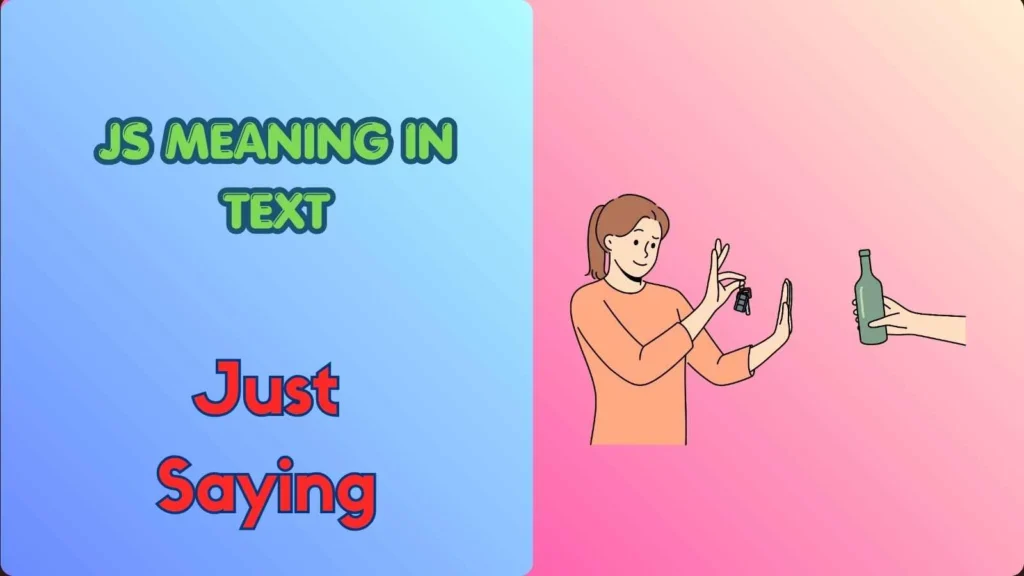
In texting and online chat, JS most commonly means “Just Saying.” People use it when sharing an opinion, giving advice, making a comment, or adding a small warning without sounding too serious.
It is often used at the end of a sentence to soften the tone. Instead of sounding rude or aggressive, “JS” makes the message feel lighter and more casual.
Here are a few quick examples:
- “You should probably leave earlier next time, JS.”
- “That movie was overrated, JS.”
- “You two clearly like each other 😂 JS.”
In many chats, JS works like saying:
- “I’m just being honest.”
- “Just my opinion.”
- “No offense.”
People mostly use it in:
- Text messages
- WhatsApp chats
- Instagram DMs
- Snapchat messages
- TikTok comments
- Online gaming chats
The meaning can change depending on context. For example, in programming conversations, JS often stands for JavaScript. But in everyday texting, “Just Saying” is the most common meaning.
The abbreviation became popular because people wanted faster and shorter ways to communicate online. Similar slang terms include:
- IMO — In My Opinion
- TBH — To Be Honest
- FYI — For Your Information
These short forms help conversations move quickly while keeping messages casual and friendly.
Full Form, Stands For & Short Meaning of JS
The full form of JS in text slang is:
JS = Just Saying
This phrase is used to add a personal opinion, casual remark, or indirect suggestion during a conversation.
Short Meaning of JS
The short meaning of JS is:
“I’m simply sharing my opinion.”
It usually does not mean the person is trying to argue. Instead, they are making a quick comment without sounding too intense.
Why People Use JS
People use JS because it:
- Saves typing time
- Sounds casual
- Softens criticism
- Keeps conversations relaxed
- Fits social media culture
For example:
- “That restaurant is expensive, JS.”
- “You might want to double-check that answer, JS.”
In these examples, the speaker gives advice or an opinion without sounding overly serious.
Other Possible Meanings of JS
Depending on the topic, JS may also stand for:
- JavaScript (programming language)
- Jesus
- Job Satisfaction
- Jersey Shore
- Japanese Spitz
However, these meanings are less common in casual texting unless the conversation clearly points to them.
Quick Tip
If you are unsure what JS means, look at:
- The topic of the chat
- The tone of the message
- Who sent it
- The platform being used
Context almost always reveals the correct meaning.
Origin, History & First Known Use of JS
The abbreviation JS became popular during the early growth of internet chatrooms, texting culture, and online forums in the late 1990s and early 2000s. As mobile phones became more common, people started shortening phrases to type faster.
“Just Saying” naturally turned into “JS” because it was simple and easy to remember.
Early Internet Culture
Before smartphones existed, text messages had character limits. Users shortened many phrases, including:
- BRB — Be Right Back
- LOL — Laugh Out Loud
- OMG — Oh My God
- JS — Just Saying
Online messaging apps and forums helped these abbreviations spread quickly across the internet.
Rise Through Social Media
JS became even more popular with:
- Facebook comments
- Twitter replies
- Snapchat chats
- TikTok conversations
- Instagram messaging
The phrase worked well online because it allowed people to express opinions without sounding too harsh.
For example:
- “That haircut was a choice… JS 👀”
This style became common in meme culture and casual online conversations.
Why It Stayed Popular
Unlike many old internet slang terms that disappeared, JS stayed relevant because it still fits modern texting habits. People continue to prefer short, quick communication on social apps.
Even today, younger users and frequent texters still use JS regularly in:
- Group chats
- Meme pages
- Gaming communities
- Comment sections
Its flexibility and casual tone helped it survive longer than many older abbreviations.
How People Use JS in Daily Conversations
People use JS in many everyday conversations, especially when they want to share thoughts casually. The abbreviation often appears at the end of sentences, but sometimes it can also appear alone.
Common Situations Where JS Is Used
Giving Advice
- “You should probably save your work more often, JS.”
Sharing Opinions
- “That sequel wasn’t as good as the original, JS.”
Light Teasing
- “You always forget your charger 😂 JS.”
Warning Someone
- “Traffic gets bad after 5 PM, JS.”
Tone Matters
JS can sound:
- Friendly
- Sarcastic
- Playful
- Passive-aggressive
The tone depends on emojis, punctuation, and the relationship between the people chatting.
Compare these:
- “You could’ve replied sooner, JS.”
- “You could’ve replied sooner 😂 JS.”
The emoji changes the mood completely.
Why It Feels Natural Online
JS works well because it sounds conversational. People often use it when they do not want to sound too direct or confrontational.
It acts like a verbal cushion.
Common Chat Patterns
You may see JS used like this:
- “JS though…”
- “I’m JS”
- “Just saying 🤷”
- “JS lol”
These small variations help messages feel more personal and expressive.
JS Meaning Across WhatsApp, Instagram, TikTok & Snapchat
The meaning of JS stays mostly the same across social media platforms, but the way people use it can vary slightly depending on the app culture.
On WhatsApp, JS is commonly used in private chats and group conversations.
Examples:
- “You should text them first, JS.”
- “That deal sounds suspicious, JS.”
People use it casually among friends and family.
On Instagram, JS often appears in:
- DMs
- Story replies
- Comments
Examples:
- “This outfit is actually fire 🔥 JS.”
- “That caption was clearly about him 😂 JS.”
Instagram users often combine JS with emojis and slang.
TikTok
TikTok users use JS heavily in comment sections.
Examples:
- “This trend is getting old, JS.”
- “She carried the whole video, JS.”
TikTok slang changes quickly, but JS remains easy to understand.
Snapchat
On Snapchat, conversations are usually fast and informal, making abbreviations extremely common.
Examples:
- “You left me on opened… JS 😭”
- “That filter looks better on you, JS.”
Snapchat users often use JS jokingly.
Main Difference Across Platforms
The meaning stays similar, but the tone changes:
- WhatsApp → conversational
- Instagram → expressive
- TikTok → opinionated
- Snapchat → playful
Different Meanings of JS in Other Fields
Although “Just Saying” is the most common texting meaning, JS can stand for many other things depending on the topic.
JavaScript
In technology and programming, JS commonly means JavaScript.
Example:
- “I’m learning JS for web development.”
This is one of the most recognized non-slang meanings.
Religion
Some people use JS as shorthand for Jesus in religious discussions.
Example:
- “Trust JS and stay positive.”
Business & Work
In workplaces, JS may stand for:
- Job Satisfaction
- Job Sheet
These meanings usually appear in professional conversations.
Entertainment
JS can sometimes refer to:
- Jersey Shore
- Japanese shows
- Music artists with initials J.S.
Sports & Gaming
Gamers and sports fans may use JS as player initials or team shorthand.
How to Understand the Correct Meaning
To figure out the right meaning:
- Check the conversation topic
- Look at nearby words
- Notice who is speaking
- Consider the platform
For example:
- “I’m studying JS tonight” → likely JavaScript
- “You’re overthinking it, JS” → Just Saying
Context always matters.
Common Confusions, Mistakes & Wrong Interpretations
Many people misunderstand JS because abbreviations can have multiple meanings.
Common Mistakes
Thinking It Always Means JavaScript
This happens often in tech communities.
Example confusion:
- “You’re being dramatic, JS.”
Clearly, this does not mean JavaScript.
Reading It as Something Rude
Sometimes JS can sound passive-aggressive, especially without emojis or context.
Example:
- “You could try harder, JS.”
Some readers may take offense even if the sender meant it lightly.
Mixing It Up With Similar Slang
People sometimes confuse JS with:
- JK — Just Kidding
- JSYK — Just So You Know
- TBH — To Be Honest
Each abbreviation has a different purpose.
Misreading Tone
Text messages lack facial expressions and voice tone, which can create misunderstandings.
Adding emojis often helps:
- “You were late again 😂 JS”
This feels softer than:
- “You were late again. JS.”
Best Way to Avoid Confusion
If you are unsure, simply ask:
- “What do you mean by JS?”
Most people will explain quickly.
Similar Terms, Alternatives & Related Slang
JS belongs to a large group of internet slang terms people use in casual conversation.
Similar Slang Terms
TBH — To Be Honest
Used for honesty or opinions.
- “TBH, I liked the first season more.”
IMO — In My Opinion
Used when sharing thoughts.
- “IMO, that phone is overpriced.”
FYI — For Your Information
Used to share useful information.
- “FYI, the meeting moved to 3 PM.”
JK — Just Kidding
Used after jokes.
- “You owe me lunch 😂 JK.”
JSYK — Just So You Know
Used for reminders or updates.
- “JSYK, they already left.”
Why These Terms Are Popular
People like slang abbreviations because they:
- Save time
- Feel modern
- Match fast conversations
- Make chats casual
Related Internet Language
You may also see:
- NGL — Not Gonna Lie
- IDC — I Don’t Care
- SMH — Shaking My Head
- FR — For Real
These abbreviations are especially popular among younger users on social media.
Examples of JS in Real Chat Situations
Seeing real examples makes it easier to understand how JS works naturally in conversations.
Friendly Advice
- “You should probably sleep earlier, JS 😴”
Playful Teasing
- “You spend more time on TikTok than homework 😂 JS”
Opinion Sharing
- “That new song isn’t their best one, JS.”
Relationship Chats
- “I think they still like you 👀 JS”
Group Chat Example
Friend 1:
- “Should I text her first?”
Friend 2:
- “Yeah honestly you should, JS.”
Snapchat Example
- “You ignored my snap all day 😭 JS”
TikTok Comment Example
- “This creator deserves more followers, JS.”
Instagram DM Example
- “That outfit actually suits you 🔥 JS”
These examples show how flexible the abbreviation is in modern online conversations.
How to Reply When Someone Says JS
How you reply depends on the tone and context of the message.
Casual Responses
- “Fair point.”
- “Haha maybe you’re right.”
- “I get what you mean.”
Playful Replies
- “Wow okay, calling me out 😂”
- “Not you exposing me 😭”
- “You might be onto something.”
If You Disagree
- “I don’t think so honestly.”
- “Agree to disagree 😅”
- “That’s your opinion lol.”
If You Are Confused
You can simply ask:
- “Wait, what do you mean by JS?”
Keep the Tone Friendly
Since JS is usually casual, relaxed replies work best. Overreacting can make small comments feel bigger than intended.
Is JS Still Popular? Trends & Online Usage
Yes, JS is still widely used online, especially among younger internet users and active social media communities.
Why It Remains Popular
JS survives because it is:
- Short
- Easy to type
- Simple to understand
- Useful in many situations
Unlike older slang that disappeared, JS still fits modern texting habits.
Where It Is Most Common Today
You will still find JS regularly on:
- TikTok
- Snapchat
- Discord
- Gaming chats
Modern Slang Competition
New slang appears constantly, including:
- FR
- Bet
- No cap
- Mid
Even with newer terms trending, JS remains common because it feels natural and flexible.
Popular With Different Age Groups
- Teenagers use it casually
- Young adults use it in memes and chats
- Older users may still prefer writing “just saying”
Will It Stay Relevant?
Most likely, yes. As long as people continue texting quickly and casually, abbreviations like JS will remain useful online.
Internal Linking Suggestions
You can internally link this article to related abbreviation topics such as:
- “TBH Meaning in Text”
- “IMO Meaning in Chat”
- “SMH Meaning Online”
- “NGL Meaning on Snapchat”
- “FR Meaning in Slang”
- “JK Meaning in Text Messages”
FAQs:
What does JS stand for in texting?
JS usually stands for “Just Saying” in text messages and online chats.
Is JS rude in messages?
Not always. It depends on the tone and context. Sometimes it is playful, while other times it may sound passive-aggressive.
What does JS mean on Snapchat?
On Snapchat, JS commonly means “Just Saying” and is used casually in chats and snaps.
Does JS mean JavaScript too?
Yes. In programming or tech discussions, JS often refers to JavaScript.
How do you use JS in a sentence?
Example:
- “You should double-check the address, JS.”
Is JS still popular online?
Yes. People still use JS regularly on TikTok, Instagram, WhatsApp, and Snapchat.
Conclusion:
The term JS is one of the many internet abbreviations that make online conversations quicker and more casual. In most text messages and chats, JS means “Just Saying,” a phrase people use to share opinions, advice, or playful comments without sounding too serious.
While JS can also mean JavaScript or other things in specific contexts, the meaning usually becomes clear from the conversation itself.
Its simple structure, flexible tone, and easy usage have helped it remain popular across social media platforms like TikTok, Instagram, Snapchat, and WhatsApp.
Now that you understand the JS meaning in text, you’ll have a much easier time recognizing it in chats and using it naturally in your own conversations.