If you’ve received a message saying TTM and wondered what it means, you’re not alone. Text abbreviations and internet slang evolve quickly, and keeping up with them can be challenging.
TTM is one of those short acronyms that appears in text messages, social media chats, gaming conversations, and messaging apps.
People often search for “TTM meaning in text” because the abbreviation can have different meanings depending on the context. In most cases, it is a friendly and casual way to start or continue a conversation.
Understanding TTM can help you communicate more naturally online and avoid confusion when chatting with friends, family, coworkers, or social media followers.
In this guide, you’ll learn the meaning of TTM, its origin, how people use it across different platforms, examples from real conversations, and the best ways to reply when someone sends it to you.
What Does TTM Mean in Text & Chat?
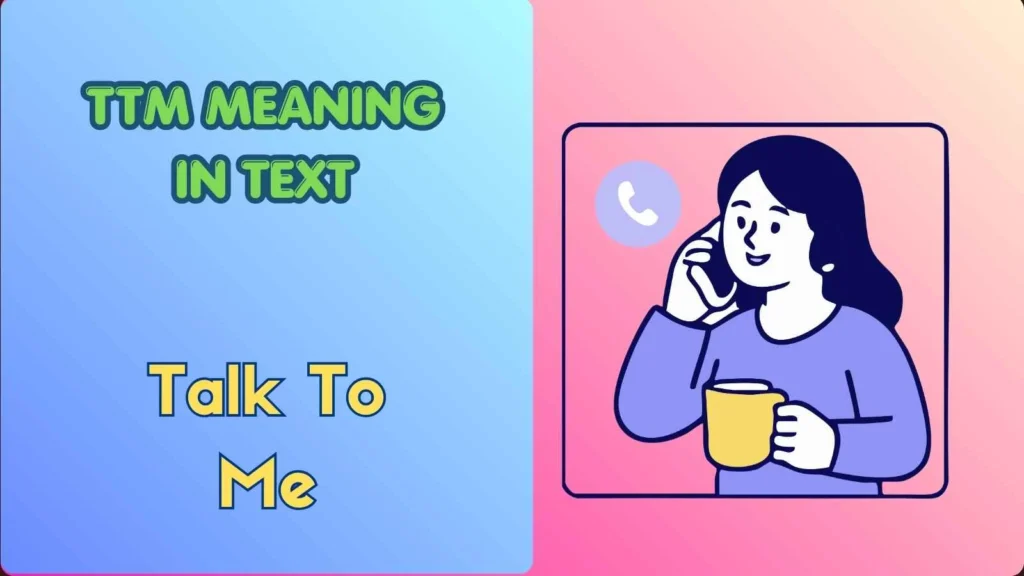
In text messages and online conversations, TTM most commonly means “Talk To Me.”
It is often used when someone wants to start a conversation, get a response, or encourage someone to engage in chat.
People use TTM when they:
- Want attention from a friend
- Feel bored and want to chat
- Need advice or support
- Want to continue a conversation
- Are inviting someone to message them
The tone is usually friendly and informal.
Quick Examples
- “Hey, TTM when you’re free.”
- “I’m bored 😅 TTM.”
- “Haven’t heard from you lately. TTM!”
- “Need your opinion on something. TTM.”
In most situations, TTM is simply an invitation to communicate.
Full Form, Stands For & Short Meaning of TTM
The most widely accepted full form of TTM in texting is:
TTM = Talk To Me
Short Meaning
It means:
- Message me
- Chat with me
- Reply to me
- Start a conversation
- Reach out to me
The phrase is commonly used because it is shorter and faster to type than writing “talk to me” in full.
Why People Use It
Modern messaging encourages quick communication. Acronyms like TTM save time while keeping conversations casual.
For example:
- “TTM later.”
- “TTM ASAP.”
- “Whenever you’re free, TTM.”
These messages sound friendly and direct without being overly formal.
Origin, History & First Known Use of TTM
Like many internet abbreviations, TTM emerged during the rise of SMS texting and online chat rooms in the late 1990s and early 2000s.
Back then, text messages had character limits, and mobile phones used numeric keypads. Users shortened phrases whenever possible.
Common abbreviations from that era included:
- LOL (Laugh Out Loud)
- BRB (Be Right Back)
- IMO (In My Opinion)
- TTYL (Talk To You Later)
- TTM (Talk To Me)
As instant messaging platforms became popular, TTM spread across online communities. Social media later helped the acronym reach an even larger audience.
Today, while many people type full sentences, abbreviations like TTM remain popular because they are simple, recognizable, and easy to use.
How People Use TTM in Daily Conversations
TTM is flexible and fits many conversation types.
When Someone Is Bored
- “Nothing to do tonight. TTM 😄”
1 When Someone Wants Advice
- “Need help choosing a laptop. TTM.”
2 When Reconnecting
- “It’s been a while. TTM sometime.”
3 When Feeling Lonely
- “Everyone’s busy today. TTM.”
4 When Starting a Chat
- “Hey! TTM when you get a chance.”
Because it sounds friendly rather than demanding, TTM works well among friends and acquaintances.
Common Usage Patterns
- TTM later
- TTM soon
- TTM when free
- Please TTM
- TTM ASAP
The exact meaning depends on the conversation’s context.
TTM Meaning Across WhatsApp, Instagram, TikTok & Snapchat
Different platforms may influence how people use TTM, but the core meaning generally remains the same.
On WhatsApp, TTM usually means:
- Message me
- Call me
- Continue chatting
Example:
- “Busy right now. TTM tonight.”
People often use TTM in stories, captions, or DMs.
Example:
- “Questions? TTM.”
It encourages followers to send messages.
TikTok
TikTok users may write TTM in comments or captions.
Example:
- “TTM if you’ve had the same experience.”
This invites engagement from viewers.
Snapchat
On Snapchat, TTM often appears in private chats.
Example:
- “You disappeared all day 😂 TTM.”
The meaning remains casual and conversational.
Different Meanings of TTM in Other Fields
Although “Talk To Me” is the most common text meaning, TTM can have other definitions.
Business & Finance
TTM may mean:
Trailing Twelve Months
This refers to financial performance measured over the previous 12 months.
Example:
- “The company’s TTM revenue increased.”
Healthcare
In certain medical contexts, TTM can mean:
Targeted Temperature Management
A treatment used in critical care medicine.
Technology
Some organizations or technical fields may use TTM as an internal abbreviation with unique meanings.
Because of these alternative definitions, context is important when interpreting TTM.
Common Confusions, Mistakes & Wrong Interpretations
Many users misunderstand TTM when they first encounter it.
Common Mistakes
Thinking It Means “Text Me”
Although similar, TTM usually means “Talk To Me.”
Confusing It with TTYL
TTYL means:
- Talk To You Later
TTM means:
- Talk To Me
These expressions serve different purposes.
Assuming It Is Romantic
Sometimes people think TTM automatically indicates flirting.
In reality, it is often completely platonic and simply invites conversation.
Tips to Avoid Confusion
- Read the surrounding messages.
- Consider the relationship between users.
- Look at the platform where it appears.
- Ask for clarification if unsure.
Similar Terms, Alternatives & Related Slang
TTM belongs to a large family of internet abbreviations.
Similar Expressions
- DM Me
- PM Me
- HMU (Hit Me Up)
- TXT Me
- Ping Me
- Message Me
- Reach Out
- Let’s Chat
Related Slang
- BRB
- TTYL
- LOL
- ROFL
- IMO
- TBH
- IDK
- FYI
Internal Linking Suggestions
You can link this article to related abbreviation guides such as:
- HMU Meaning in Text
- TTYL Meaning in Text
- TBH Meaning in Text
- IMO Meaning in Text
- IDK Meaning in Text
- WYLL Meaning in Text
- BTW Meaning in Text
These terms are frequently searched together.
Examples of TTM in Real Chat Situations
Here are realistic examples showing how people use TTM.
Example 1
Alex: I’m bored today 😅
Jordan: TTM!
2
Sarah: Need your advice on something.
Emma: Sure, TTM.
Example 3
Mike: Haven’t spoken in ages.
Chris: Yeah! TTM sometime this week.
4
Lily: Feeling stressed.
Anna: Sorry to hear that ❤️ TTM if you want.
5
Jake: Got exciting news!
Ryan: TTM right now 😂
These examples show how naturally TTM fits into casual conversations.
How to Reply When Someone Says TTM
When someone sends TTM, they usually want interaction.
Simple Replies
- “Sure, what’s up?”
- “I’m here.”
- “What do you want to talk about?”
- “Hey! How are you?”
- “Of course 😊”
Friendly Replies
- “What’s going on?”
- “Tell me everything!”
- “How can I help?”
- “I’ve got time. What’s up?”
If You’re Busy
- “Can’t talk right now, but I’ll message later.”
- “Busy at the moment. I’ll get back to you soon.”
The best response depends on your availability and relationship with the sender.
Is TTM Still Popular? Trends & Online Usage
Yes, TTM is still used today, although it is not as dominant as some newer slang expressions.
Its continued popularity comes from its simplicity and usefulness.
Why It Remains Relevant
- Easy to type
- Easy to understand
- Works on every platform
- Friendly and conversational
- Encourages engagement
Many users prefer abbreviations because they make texting faster and less formal.
While newer slang appears regularly, TTM continues to be recognized across messaging apps and social networks.
For that reason, understanding TTM remains useful for anyone active online.
Why Do People Use TTM Instead of Writing “Talk To Me”?
The biggest reason people use TTM is convenience. Online conversations move quickly, and many users prefer abbreviations that save time and effort. Typing three letters is faster than writing the full phrase.
TTM also feels casual and friendly. It creates a relaxed tone that fits naturally into modern texting culture.
Reasons people prefer TTM:
- Faster typing
- Informal and friendly
- Common among younger users
- Works across multiple platforms
- Easy to recognize
In many cases, TTM helps keep conversations flowing without sounding too formal.
TTM in Friendships and Relationships
TTM is commonly used between friends, family members, and romantic partners. The meaning can vary slightly depending on the relationship.
Between Friends
Friends often use TTM when they want to chat or catch up.
Example:
- “It’s been forever. TTM this weekend.”
Between Couples
In romantic conversations, TTM can express affection or a desire for attention.
Example:
- “Miss you ❤️ TTM when you’re free.”
Between Family Members
Family members may use it to check in with each other.
Example:
- “Haven’t heard from you lately. TTM soon.”
The phrase remains warm and conversational regardless of who uses it.
When You Should Avoid Using TTM
Although TTM is widely understood, it is not suitable for every situation.
Avoid using TTM in:
- Professional emails
- Job applications
- Academic assignments
- Formal business communication
- Legal or official documents
Instead, use complete phrases such as:
- “Please contact me.”
- “Let’s discuss this further.”
- “Feel free to reach out.”
Using proper language in professional settings helps maintain credibility and clarity.
Age Groups That Commonly Use TTM
TTM is most popular among people who regularly communicate through messaging apps and social media.
Teenagers
Teenagers often use TTM in casual chats with friends and classmates.
Young Adults
Young adults frequently use it on messaging platforms and social networks.
Older Adults
Older users may recognize TTM, though they often prefer writing the full phrase.
As internet slang becomes more mainstream, abbreviations like TTM are being understood by a wider audience.
Signs Someone Wants a Conversation When They Send TTM
When a person sends TTM, they are usually looking for interaction.
Common reasons include:
- They are feeling bored
- They need advice
- They want emotional support
- They miss talking to you
- They have news to share
- They want your opinion
Understanding the intent behind TTM can help you respond appropriately and keep the conversation engaging.
TTM vs Other Popular Text Abbreviations
Many texting acronyms seem similar but have different meanings.
| Abbreviation | Meaning | Purpose |
|---|---|---|
| TTM | Talk To Me | Start a conversation |
| TTYL | Talk To You Later | End a conversation |
| HMU | Hit Me Up | Contact me |
| DM | Direct Message | Private message |
| TBH | To Be Honest | Express an opinion |
| IDK | I Don’t Know | Show uncertainty |
Knowing these differences can prevent misunderstandings during online conversations.
Funny and Creative Ways People Use TTM Online
Social media users often use TTM humorously to attract attention or increase engagement.
Examples:
- “My pizza arrived cold. TTM about my pain 🍕😂”
- “Just watched the confused movie ever. TTM!”
- “I have a controversial opinion. TTM if you’re brave enough 😆”
These playful uses help make posts feel interactive and encourage replies.
TTM in Online Gaming Communities
Gamers often use TTM while playing multiplayer games.
Examples:
- “Need one more teammate. TTM.”
- “Anyone online? TTM.”
- “Strategy discussion after the match. TTM.”
In gaming, TTM usually serves as a quick request for communication or coordination.
How TTM Can Increase Social Media Engagement
Content creators sometimes use TTM to encourage followers to interact with their posts.
Common examples include:
- “Need advice? TTM.”
- “Questions about today’s video? TTM.”
- “Want more content like this? TTM below.”
By inviting responses, creators can build stronger relationships with their audience and improve engagement rates.
Will TTM Remain Popular in the Future?
Internet slang changes constantly, but simple abbreviations often survive longer than trendy phrases.
TTM has several advantages:
- Easy to remember
- Easy to type
- Clear meaning
- Useful in many situations
- Recognized across platforms
While new slang terms will continue to emerge, TTM is likely to remain part of online communication for years because it fulfills a simple and practical purpose.
TTM Meaning in Different English-Speaking Countries
The meaning of TTM is generally the same in countries where English is widely spoken.
This includes:
- United States
- United Kingdom
- Canada
- Australia
- New Zealand
Although texting habits vary by region, “Talk To Me” remains the most widely recognized interpretation of TTM in casual online conversations.
FAQs:
What does TTM stand for in texting?
TTM most commonly stands for Talk To Me, meaning someone wants to chat or receive a response.
Is TTM a friendly expression?
Yes. TTM is usually friendly, casual, and conversational.
Does TTM mean the same thing on Snapchat?
Most of the time, yes. On Snapchat, TTM generally means “Talk To Me.”
Can TTM be used professionally?
Not usually. TTM is primarily internet slang and is best suited for informal conversations.
What is the difference between TTM and TTYL?
TTM means “Talk To Me,” while TTYL means “Talk To You Later.”
Is TTM still used in 2026?
Yes. Although many people use full phrases, TTM continues to appear in texts, social media, and messaging apps.
Conclusion:
Understanding the TTM meaning in text is simple once you know the context. In most online conversations, TTM stands for “Talk To Me,” a casual invitation to start chatting, continue a conversation, or encourage someone to respond.
It is widely used across WhatsApp, Instagram, TikTok, Snapchat, and traditional text messaging.
While TTM can have different meanings in business, finance, and healthcare, the texting definition remains the most common.
Knowing how and when to use TTM can help you communicate more naturally online and better understand modern internet slang.
Whether you’re reconnecting with friends, asking for advice, or simply looking for someone to chat with, TTM remains a short, friendly, and effective way to start a conversation.